The power of childhood memories and why you shouldn’t make assumptions

Sunday afternoon,

My sister, my hubby, and I are returning from our Sunday excursion when my husband suddenly reminds me, “Didn’t you say you wanted to buy a lottery ticket?”.

Of course, I did. Who doesn’t dream of winning just enough money to go on a month-long trip to South America, buy a house so they never have to pay rent, and swap their 9-5 office job with charity work, volunteering, a little farm in the suburbs, and a cottage by the sea? Well, that’s my dream.

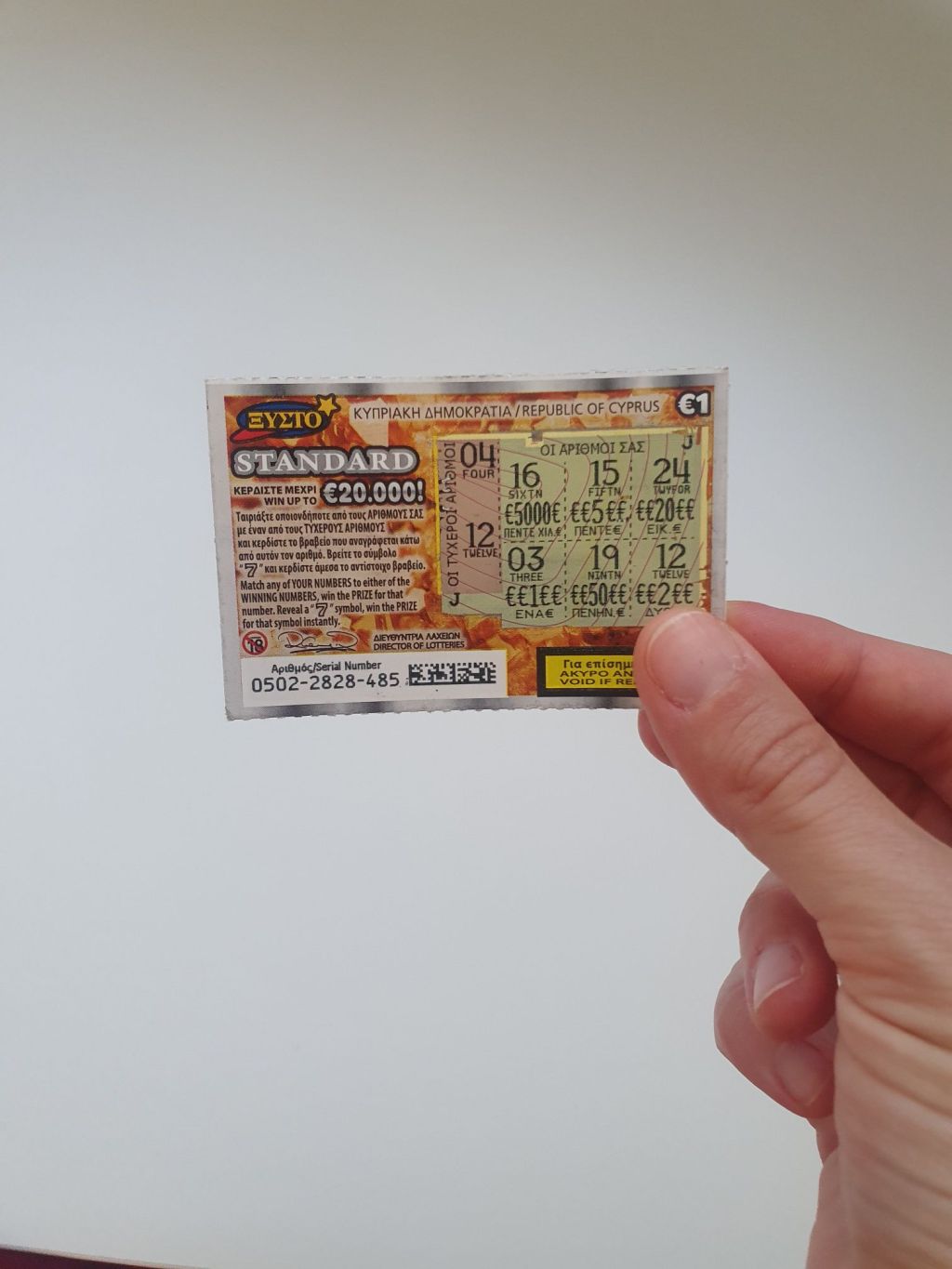
So, we made a stop at the nearest bet shop (in Cyprus, you can’t buy a lottery ticket online, you can only get it from bet shops, which are mostly frequented by old men who stare at any woman walking through the door) and we got our tickets. Bet shops also sell scratch cards, which for Cypriot millennials hold a special place in our hearts.

Our parents used to buy us one from a street seller at the beach, at christenings, weddings, or pretty much any celebration, or on a Sunday afternoon, from a local kiosk, as a treat (as well as ice cream, of course, an Agrino cone most of the time). Beautiful, happy memories that evoked almost a melancholic nostalgia for my childhood innocence and carefreeness. So, we decided to get a couple of scratch cards as well.

My sweet husband, who didn’t grow up in Cyprus, had no idea what a scratch card was and what to do with it.

“You really don’t know how it works?” I exclaimed.

“No, we didn’t have this in Egypt!” he answered.

“YOU DIDN’T??” I replied.

I immediately assumed that everyone knows what a scratch card is, and it reminded me not only how powerful childhood memories are but also not to assume that just because I know or understand something well, everyone else does. That’s how misunderstandings happen, quite often, due to wrong assumptions.

That’s a useful reminder for everyone, particularly for trainers, teachers, managers, and anyone who imparts skills or knowledge to others. Don’t assume your students/trainees understand something just because you do. Always check their level of knowledge and ask questions so you can design your session based on their level, not yours.

Eleni

Words to use instead of ‘very ‘- Eleni’s Love to Learn English mini lessons

We all use the word ‘very’ a lot!

On today’s mini-lesson I provide you with a few alternatives. If you have any more ideas, write them below!

I hope you enjoy this video. As always, ideas, comments, and suggestions are welcome!

Eleni

Greek Root Words – Eleni’s Love to Learn English mini lessons

Today’s lesson is about Greek root words in English.

Can you think of any more examples other than the ones mentioned on the video? Comment below if you do.

As always, feedback, comments and ideas are welcome!

Eleni

The Odd One Out (pronunciation) – Eleni’s Love to Learn English mini lessons

Today’s mini-lesson is a short pronunciation game. The Odd One Out. Out of the three words in each set, which ones differs in terms of pronunciation?

I hope you enjoy it!

Any feedback and/or suggestions for future videos as always welcome!

Eleni

Easter Special – Eleni’s Love to Learn English mini lessons

Since it’s Easter in Cyprus, Greece and Christian Orthodox communities across the world, I thought I’d make a fun little Easter Special lesson on Easter vocabulary.


Please note the lesson is not focused on Cypriot/Greek Easter but Easter in general, so it’s useful to all English learners.


Simply look at the photos and try to guess the word.

How many did you get right?

As always comments, ideas and any feedback are welcome.


Happy Easter!

Eleni

Contronyms – Eleni’s Love to Learn English mini lessons

What are contronyms and what are some examples of contronyms?

That’s what today’s lesson is all about.

As always, feedback, comment and suggestions are welcome!

Eleni

Homophones – Eleni’s Love to Learn English mini lessons

On today’s lesson we focus on homophones, words which sound the same but have a different meaning and/or spelling.

Answers of the matching exercise:

break – brake
buy – by
right – write
allowed – aloud
ate – eight
ball – bawl
sail – sale
eye – I
here – here
flew – flu

Any feedback and/or suggestions for future videos as always welcome!

Eleni

The 10 most difficult words to pronounce in English – Eleni’s Love to Learn English mini lessons

According to a Reddit thread with over 5000 responses these were voted as the 10 most difficult words to pronounce in English. Do you know how to pronounce them? Watch the video to find out.

If there are any words you find difficult to pronounce, please comment and I can make another video with your suggestions.

Any feedback and/or suggestions for future videos as always welcome!

Eleni

‘the’ or ‘a/an’-Eleni’s Love to Learn English mini lessons

For many English language learners using definite (the) and indefinite (a/an) articles correctly doesn’t come easy.

Here’s a quick reminder on when to use which.

Eleni

Time prepositions-Eleni’s Love to Learn English mini lessons

In the summer or on the summer?

At 5pm or on 5pm?

When do we use in, on or at?

Time prepositions can be confusing so watch the video to learn or just revise what preposition to use with days, months, years, dates, seasons etc.

Eleni