Countable and uncountable nouns-Eleni’s Love to Learn English mini lessons

A little game on this week’s video to learn/revise countable (nouns that have plural form) and uncountable (nouns that only have singular form) nouns.

Which of the nouns on the video are countable, uncountable or both?

Eleni

Work-related expressions-Eleni’s Love to Learn English mini lessons

How many times have you been asked “What do you do for a living”?

If you are an adult, probably hundreds of times and if you are a non-native speaker it’s not always easy to answer this question. The mind sometimes gets stuck and you end up blurting out the first thing you think which might not be necessarily correct.

So here’s some expressions you can use when asked this question.I hope you find it useful!

Eleni

Most common pronunciation mistakes of Greek-Cypriot Speakers -Eleni’s Love to Learn English mini lessons

A fellow EFL teacher asked me to make a video on pronunciation and mistakes different speakers of other languages make in English. Since I’m Greek Cypriot I started with a video focusing on the most common mistakes Greek Cypriots make when they speak in English.

This took me longer than expected and lots of editing which I’m no expert on but here it is. I hope you enjoy it!

Any feedback and/or suggestions for future videos are always welcome!

Eleni

10 most commonly misspelled words-Eleni’s Love to Learn English mini lessons

According to Oxford dictionary these are the 10 most commonly misspelled English words.

Can you spell them correctly? Get a pen and some paper and play the video. Post your score below!

Any suggestions for future videos are welcome.

Eleni

Welcome to Eleni’s Love to Learn English mini lessons

Since I’m stuck in Cyprus for a while, as the global pandemic and being a non-native speaker combination severely limit my options when it comes to EFL teaching destinations, I decided to start a series of mini educational EFL lessons so I don’t forget what I’ve learned so far and remind myself why I enjoy teaching English so much.

There are million of videos out there, so my unique approach is making learning English fun and engaging.

From the start, even during my CELTA course last year, it was important for me that my students actually enjoy the lesson and it’s a positive experience for them. I want them to love learning English hence the title and the comical element of the videos.

So here’s my first ever post. I thought I’d start with one of my favourite topics, collocations.

Any suggestions for future videos are welcome!

What do I want to be now I grew up?

‘What do you want to be when you grow up?’ everyone would ask when I was a child, a teenager, a young adult.

The answer differed as I grew up. A doctor, a singer, an actress, a teacher, a psychologist, a travel writer.

And when I grew up, I became none of these. I’m not even sure what I became.

A year ago I quit my office job, I left the UK, got a CELTA, taught English in Italy for a year and now I’m back home to Cyprus after 10 years and I have no clue what to do next. It’s exciting, in theory I can do anything but I’m mostly terrified and worried I’m too old, I’ll run out of money and end up nowhere.

We were brought up to believe that by the time we hit 30 we would have tried a few different jobs and settled on a career and be happy with that one dream job, or at least be happy enough to stay in a job indefinitely.

But a single career path is not for everyone and not always the case. A lot of successful people in pretty much every field changed careers when they were older and wiser or kept changing careers or juggled more than one jobs until they died.

What do I want to be now I grew up?

I’m one of those people. Not a successful one, not yet anyway but there’s so many paths I’d like to follow but it’s impossible to try them all and even harder to stick to one or two.

Some are technically, and by technically I mean financially, not possible. One of the occupations I always wanted to go into was counselling. But I can’t afford another qualification. I can’t even ask for a loan as I’m now back to Cyprus and all the excellent credit score I built up for years in the UK won’t help me much here. Do I even want to have a debt?

Should I continue with EFL teaching? I could but my first year though rewarding, was exhausting and had zero time for myself, my friends or to travel. And should I risk going to another country and end up locked inside teaching online because of this pandemic’s unpredictable course?

I could become a writer. The idea of writing a fantasy/crime novel always excited me or a raw honest non-fiction on how society, social status and let’s face it wealth (or perhaps lack of) can and has for generations embedded a deep fear of failure especially in women. It’s always tougher for a woman, let alone one with no savings or family money to have ambitions and not let disappointment take over.

I sadly not only realised that for myself (after years of deep self-exploration) but I see it in dear friends and family who are better in what they do than others who might have become famous or run their own business but they are too shy or lack the confidence to ask or go for more.

That’s why the majority of politicians, business owners, celebrities and so on come from wealthy or at least upper-middle class families with connections and financial support making it easier to succeed.

I should believe in myself more, but at the moment I am crippled by my own insecurities and fears.

So what do I know about myself when it comes to my next career step now that I’m on those crossroads?

I don’t want to be stuck in an office 9-5, I’d love to travel and most importantly I’d be over the moon if what I do for a living helps others in any way.

Unfortunately volunteering doesn’t pay and living with my parents after 10 years living on my own is tough. I need my own space to keep growing and figure out what to do next.

For now, I’ll keep pushing myself to do more, trust myself and try not to stress about money and work and in the meantime if you have any personal inspirational stories or any piece of advice, please do share!

Namaste

Eleni

My first dogme lesson

A few months ago I had no clue what a ‘dogme’ lesson was. When I first heard the term I thought it was something related to either dogs or dogma. Very baffling.

It turns out it has nothing to do with either. A dogme lesson is:

(Wikipedia)

So ever since I’ve heard about it, I really wanted to try it. Why? Because it’s one of the scariest experiences but also one of the most empowering for a newly qualified teacher. We heavily rely on lesson plans, carefully and painstakingly prepared activities and coursebooks, especially in the first couple of months, as that’s the only lesson planning we know how to do

But we often don’t have enough time to plan a lesson as well as we would like to and panic that we might finish a lesson earlier than expected and not know what to do with the remainder of the time.

Therefore, as one may expect, walking into a classroom with zero material it’s terrifying. I really enjoy a challenge though and I firmly believe that every newly qualified teacher should try a dogme lesson. Why?

Improvisation and thinking on the spot are critical if not fundamentally essential skills for an ELT teacher, or for any teacher for that matter and a dogme lesson is perfect to practise both.

And that’s why I decided to give it a go. I’ve built great rapport with my B2 plus adult students over the last year and I thought that would be the best group to try it with.

After consulting a senior colleague (thank you James!) for valuable advice and much needed encouragement I was ready to experiment.

You can have a semi-dogme lesson, going into the classroom with some ideas which might be better for new teachers, but I as Jame explained it’s not really a dogme lesson if you already have a structure in mind and I really wanted the students to lead the session. I had prepared a back-up lesson just in case it didn’t work out (which helps a lot to know you have a back up) but other than that I left it to the students to decide what they wanted to focus on.

The experience

I find it hard to put into words how it felt to run such a lesson but I’ll try. I was terrified to begin with, but as soon as we started, time flew by and I somehow found ways to facilitate the lesson and provide as much content and language feedback as possible. My students wanted to focus on speaking, so I left it to them to come up with topics. We had 3 pair and group speaking sessions, first each pair or group discussing a separate topic, then focusing on just one. For all the activities I monitored and made notes on good language used as well as language they could improve/express better (which they did) and asked the students to try and use that language on the following activities.

Feedback from my students

I asked my students to give me feedback at the end of it and every single student enjoyed this lesson more than usual because it was on topics they chose and they were interested in. When asked what they enjoyed and what they learned:

And they all enjoyed the lesson more than usual and would like lessons with combination of both their own material and coursebook.

What I learned

Needless to say I was super happy with the feedback and they gave me a couple of ideas on what to improve for next time. I would also like to try and incorporate a grammar language point which would be challenging to do during a free flowing lesson such as dogme, but I’d like to try.

I guess the main lesson I learned from using the dogme teaching approach is that a good lesson doesn’t necessarily need a thorough, detailed lesson plan or a coursebook. Students can learn and enjoy with minimal preparation.

And since then I feel more confident about my teaching and my ability to facilitate a lesson if/when there is no plan or time to plan in detail.

Also I didn’t expect to learn so much from my students and their knowledge of rare spiders that can fly to modern history to emotional intelligence!

I firmly believe a dogme lesson should be part of the teacher training process. Even if it goes horribly wrong it will be a great practice for the real world when you are thrown into a classroom and start teaching and have to deal with situations where you run short of material or technology fails or you just forgot your lesson plan when running from class to class.

Eleni

PS If you’d like to learn more about the dogme teaching approach this is a good start.(link)

PS2 Thank you to my colleagues for the advice and encouragement and my wonderful students who I’ll dearly miss!

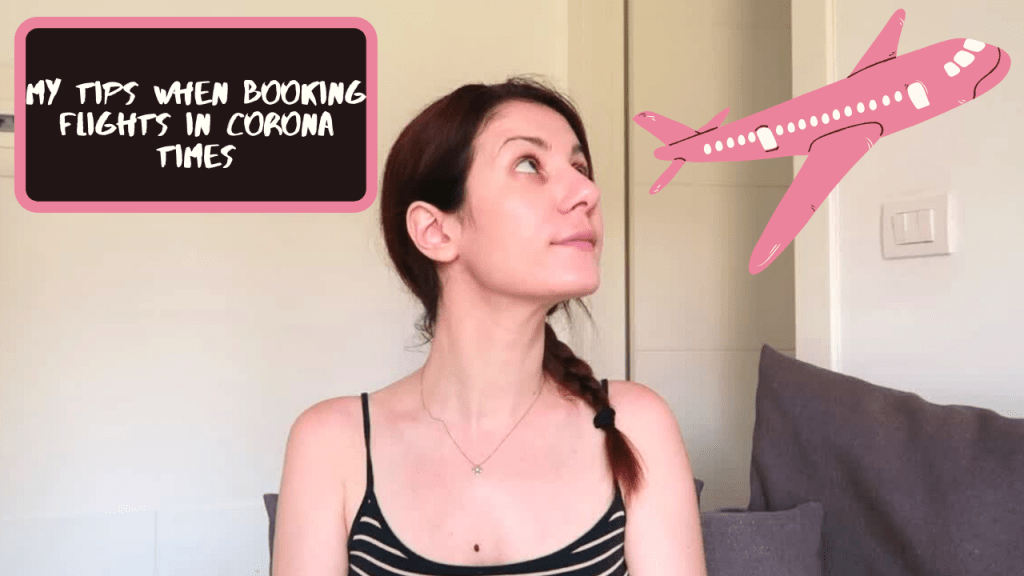
My tips when booking flights in Corona times

At the moment I’m learning the hard way how incredibly, frustratingly difficult it is to book a flight out of Italy and hopefully back to Cyprus.

So I thought I’d share my top tips from my experience so far to help fellow travellers. I explain in detail on the video below but here are my top three tips:

  1. Check whether any flights you’ve already booked are still available on the airline’s website. If with Easyjet, be aware they mark flights as ‘sold out’ but in reality they are probably cancelled.
  2. Check refund policies. For Ryanair customers it make take up to a year to get their refund, if you manage to claim for refund as even when you do, Ryanair offers you a voucher and if you’d still like a refund, you have to speak to a customer assistant. Good luck with that. All lines and chats are occupied and you have to wait for hours. On the other hand, Easyjet claims they will refund you within 28 days and up to 90 days. Thousands of customers who had flights cancelled since March are still waiting for their money.
  3. Do not trust third-party companies. Check the airline’s page directly. Understandably with all the constant changes, sites such as Skyscanner are finding it difficult to keep up to date at all times and third-party companies e.g. Gogo gate offer flights which have been altered and don’t run anymore.

If you have any tips to add please comment, the more aware we all are, the better. It saves all of us money and trouble!

Eleni

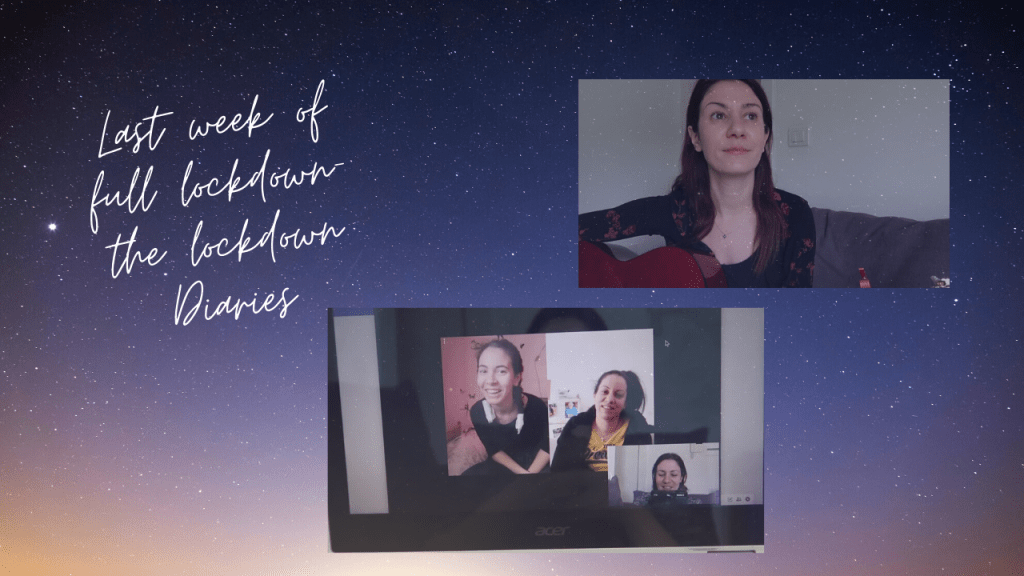
Last week of full lockdown- the Lockdown Diaries

After 8 long weeks, Italy is finally entering phase 2 of the lockdown, gradually relaxing its strict measures, so from today we are allowed outside for a walk, individual sports or exercise.

The irony is that from today, I’ve got so much work I won’t have a lot of free time to enjoy being outside, but at least the end is near and I can’t wait until all this is finally over.

So here’s this week’s vlog, much happier and more positive than last week.

And here’s the Protaras video I mentioned:

Enjoy!

Eleni

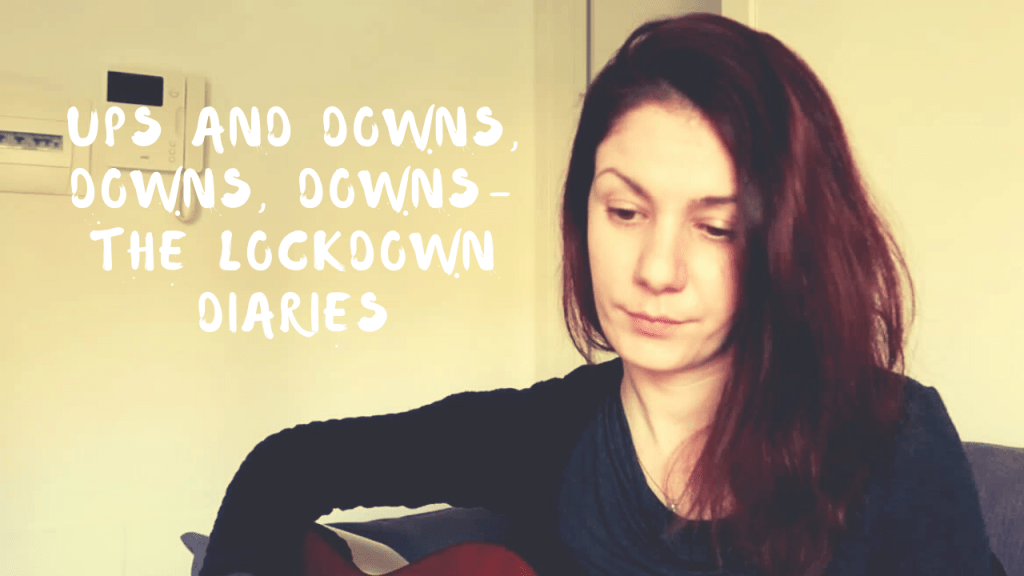
Ups and Downs, Downs, Downs- week 7, the Lockdown Diaries

Inevitably, 7 weeks under lockdown took its toll on me, I found the last few days pretty hard.

I haven’t been that productive, I felt low, sad and stressed. But that’s life. I learned to accept and go through the lows and I feel much better now.

The only reason I’m posting this, getting paranoid about getting ill, feeling low, anxious and sad is to encourage others to do share as well, mental health is as important if not more important than physical health, so there you go. This is one of my lowest moments of the last 7 weeks. 

PS. The gorgeous song I tried but failed to sing well is Lost by The Wind and The Wave