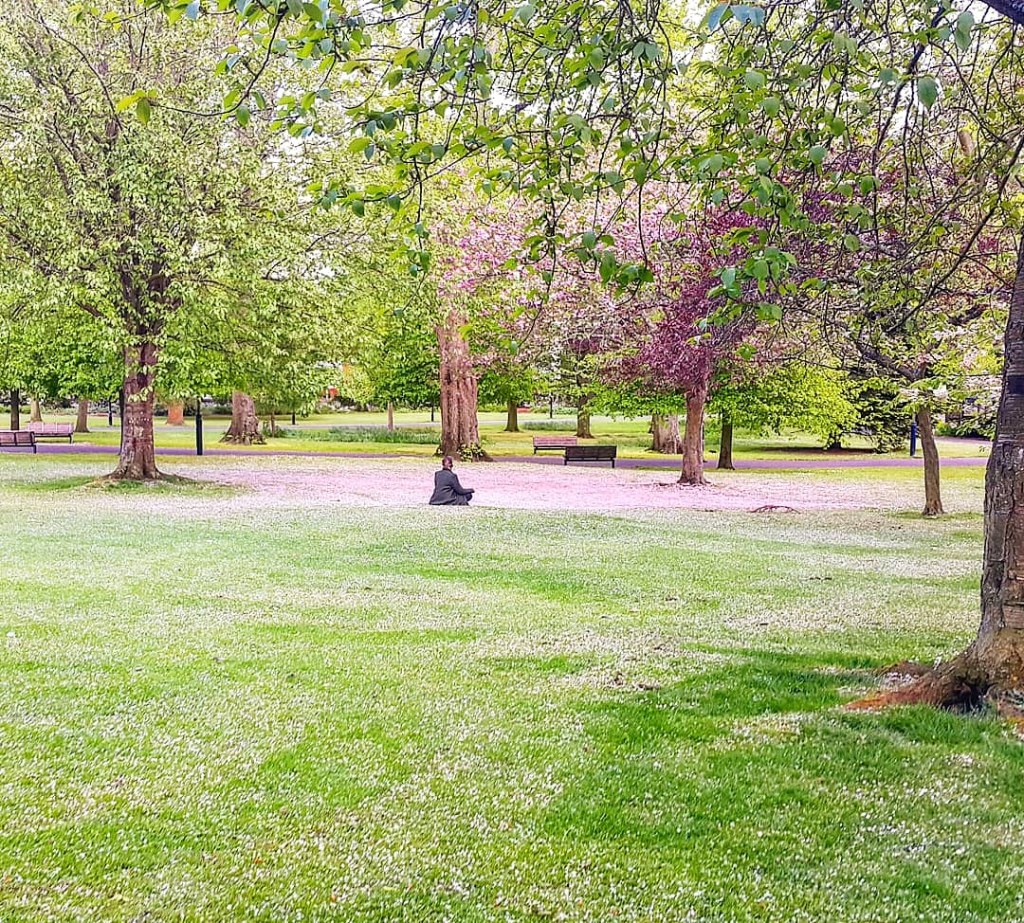
The Lockdown Diaries- The Last One

Well here we are. Most of the lockdown measures have now been lifted in Italy and it makes this the last video in the lockdown series.


It starts with a song, it includes tears and decisions, the whole lot.

It hasn’t been an easy decision, but I decided not to stay in Italy after my contract. It’s been an incredible experience but way too stressful and exhausting, mentally and physically.

I’m not quitting teaching, I will give it a go again at some point but I need time to figure out what I want to do next.

I’ll finally take the break I meant to have last year but got too scared. I’m terrified but also excited!


PS- I will still try and post a video every week 🙂


PS two- I don’t own the copyrights of the gorgeous Kodaline song I attempted to sing.

Eleni

Finally out- the Lockdown Diaries

What at week.

I’m not sure if anyone other than fellow teachers would understand just how exhausted I feel today, on a Sunday after a week of 6 new courses (on top of my existing ones), using a platform that doesn’t allow pairwork or groupwork, 6 hours of pure pain, mainly just talking for the majority of the time, soul-destroying, plus invigilating and marking and lesson planning and anything else that comes up on a normal week.

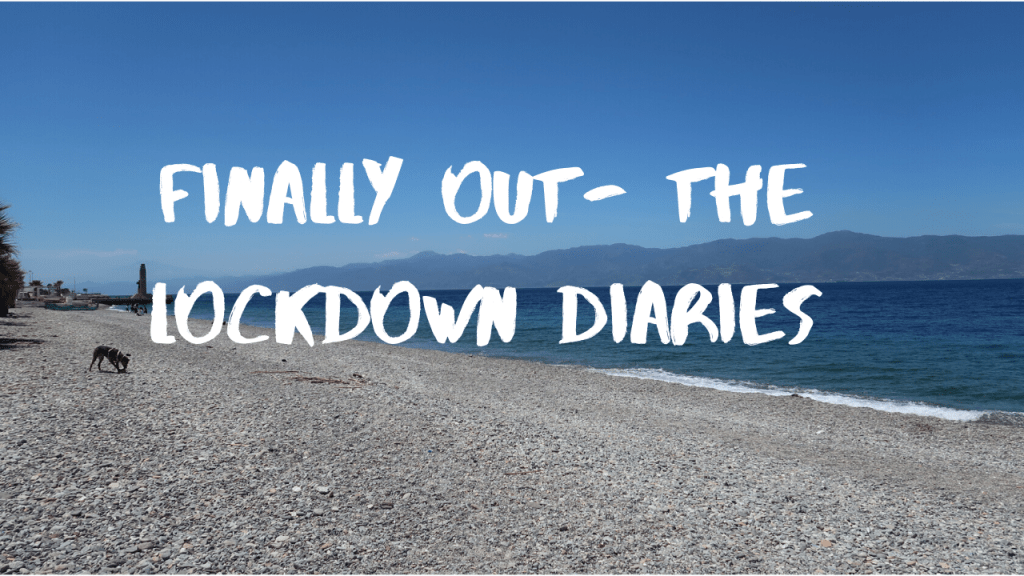
But at least we are now allowed outside and I managed to go for a walk by the beach on Friday, which was awesome.

So this week’s video is mostly footage of the outside world that I almost forgot it existed! I can’t wait to go home, enjoy my summer and seriously consider if teaching is for me. 40 days to go.

Enjoy!

Eleni

Last week of full lockdown- the Lockdown Diaries

After 8 long weeks, Italy is finally entering phase 2 of the lockdown, gradually relaxing its strict measures, so from today we are allowed outside for a walk, individual sports or exercise.

The irony is that from today, I’ve got so much work I won’t have a lot of free time to enjoy being outside, but at least the end is near and I can’t wait until all this is finally over.

So here’s this week’s vlog, much happier and more positive than last week.

And here’s the Protaras video I mentioned:

Enjoy!

Eleni

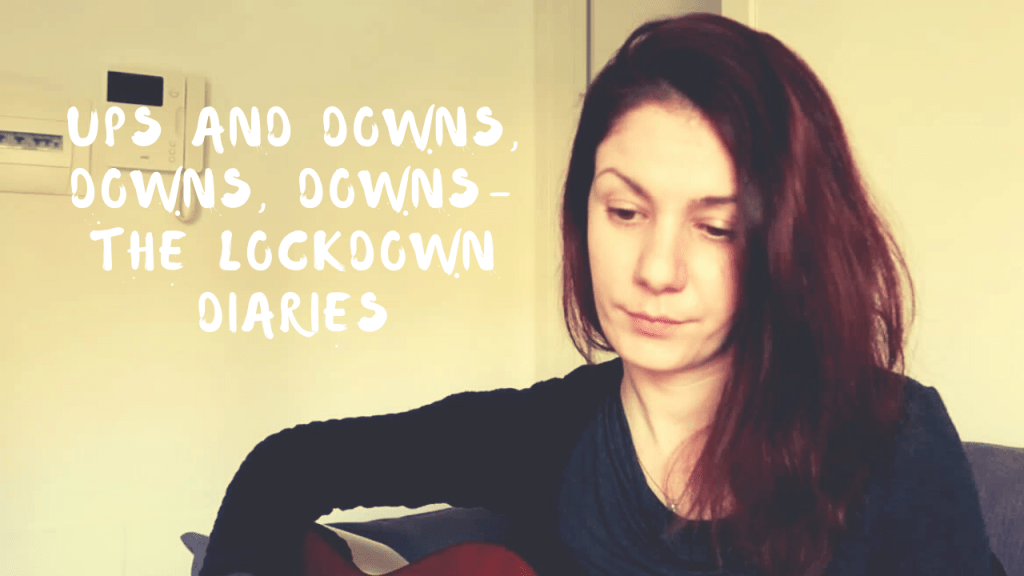
Ups and Downs, Downs, Downs- week 7, the Lockdown Diaries

Inevitably, 7 weeks under lockdown took its toll on me, I found the last few days pretty hard.

I haven’t been that productive, I felt low, sad and stressed. But that’s life. I learned to accept and go through the lows and I feel much better now.

The only reason I’m posting this, getting paranoid about getting ill, feeling low, anxious and sad is to encourage others to do share as well, mental health is as important if not more important than physical health, so there you go. This is one of my lowest moments of the last 7 weeks. 

PS. The gorgeous song I tried but failed to sing well is Lost by The Wind and The Wave

Easter in lockdown- the lockdown series

This week’s vlog was a bit late due to our little Easter break, so here’s how I spent it. Not in Vienna or Budapest or Bratislava as I originally planned but it wasn’t as bad as I thought I’d be I guess.

Catch ups with friends, lots of chocolate, pancakes, Netflix, reading, blogging, so all in all it wasn’t too bad.

Hope you enjoy it! 

Namaste

Eleni

Will we ever go back to ‘normal’? And what can we learn from people with autism?

Sunday, Easter Day.

Day 35 of lockdown.

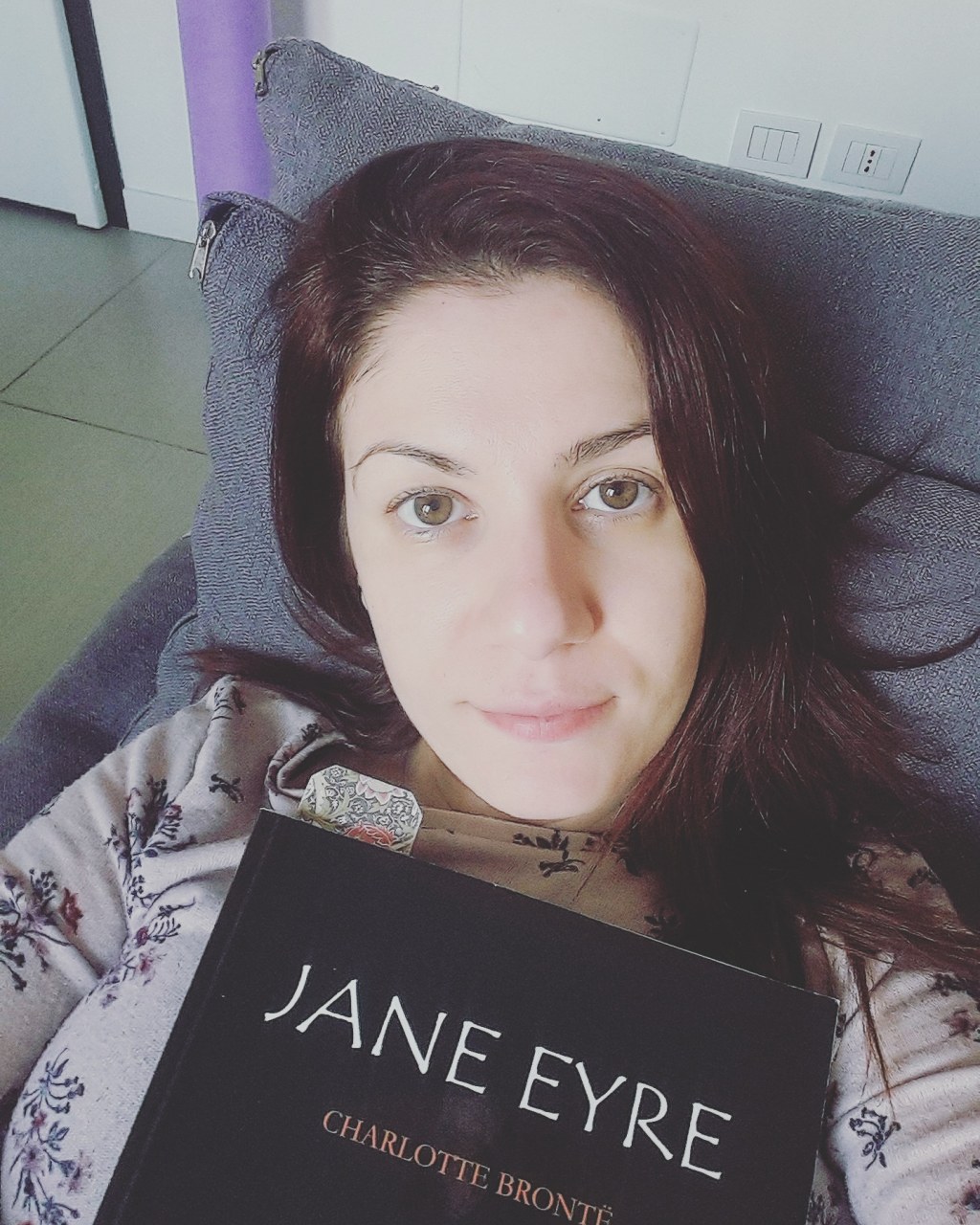
Happy Easter. I was supposed to be in Vienna today with my little sister, but I spent most of the day with Charlotte Bronte and Jane Eyre. I was so enchanted by it, I could barely let the book down. I’m not happy about this turn of events, but I’m not miserable either. I guess I’m now more used to spending endless time by myself.

I’ve been pondering for a while about the situation we are in and how our brain copes with it.

We humans have two fundamental characteristics that are perhaps in conflict in some aspects right now. We are creatures of habit, apparently it takes 30 days to form a habit and we are also social creatures.

The lockdown put us into social isolation, yes we face time and text but we don’t hug each other, touch each other, walk together, comfort one another, so at the moment we form habits that perhaps are not healthy to have when this is all over. We socialise and interact differently don’t we?

So my question is, when this is all over, how easy will it be to go back to our previous life? Will we ever go back to whatever ‘normal’ was? Can these new habits be useful in the new normal or will this experience leave us with issues we won’t necessarily know how to deal with or fears we can’t shake off or will our innate social ‘insticts’ kick in?

I posed the very same question to my friends. Some seem to think that as soon as we are let out (which I’m sure it will happen gradually, no country will risk another wave of infections) we’ll be back to our old selves straight away.

Others think that will not be the case, which I tend to agree with. I personally believe we’ll never go back to ‘normal’ the way it was. We will initially be scared of human interaction, shopping, being outside, we might not even crave going outside, since we are now used to keeping ourselves entertained indoors, but at some point our social nature will prevail, and though initially we’ll appreciate every moment we’ll then get used to our new reality again and get close to what ‘normal’ was.

But I don’t think we’ll ever go back to how we used to live. Fear never really goes away. We’ve all been traumatised but also formed new habits, learned to live with less of everything and by we I mean the whole world, how incredible it is that the whole planet is going through the same situation all at once, so we’ll all deep inside have this experience affecting our lives for ever and we hopefully learned a few things about ourselves and our future.

But this experience is not the same for all of us, for some it’s not as challenging or even difficult.

I had a chat with my friend Claire about this, who’s been diagnosed with autism a couple of years ago and I found it incredibly fascinating how her amazing brain which is wired differently to most is coping with this. I asked her if I could send her a few questions and here it’s what she said. I’ve learned a lot from reading it and I think you will too.

1. For those who might know enough if anything about autism and it’s different aspects how would you describe it and how is it for you?

Autism is hard to explain because it is vast and complex (as is everything brain related.) Autism is a neurodevelopmental difference in the way the brain functions. You can’t see my brain functioning, but it affects nearly everything about me. My personality, my sensory experience of the world, my memory, my development, the way I communicate, how I think, how I move.

There’s nothing ‘wrong’ with autism but, because we are the minority our condition is classed as a disability. But that’s just because the social world doesn’t accommodate us yet.

2. How are you coping with lockdown?

Adapting suddenly (well, inventing from scratch) a new routine – making it intricate enough to curb the anxiety of ‘empty’ minutes – was challenging beyond words. But now I am coping very well. The social world, and it’s uncertainty and misunderstanding, is overwhelming for someone like me, and therefore I am a regular self-isolator!

It takes a lot of conscious energy to be around other people. This is partly because I have to ‘mask’ a social and communication disorder, and partly because the worry about what other people think about my ways and responses to our shared world, is draining. People people people. This is not the same as being antisocial though. I love my friends and I value people very much indeed. I’d want to be the one to help someone in a crisis and I’d be the first one to support their projects and celebrate their victories. But the rules of conversations and spontaneous social times are far from natural to me.

3. How is it different for you?

In order to socialise and communicate with a person I need there to be a very clear purpose and for the words spoken to be clear and direct. Even then, I process information and conversation much more slowly than other people because I can’t filter out environmental distractions and because I need to physically see things to understand them. I’m often tired by this (and the subsequent shame) so I need to isolate to get my energy back. This means I very often feel lonely and separated from the rest of society.

Right now EVERYONE is in isolation, and for many active, extroverted, sociable autistics, and especially the non-autistic community, they maybe feeling this type of uncertainty and separateness for the first time. People are inventing ways to stay in touch although they’re not together (like online quizzes and things) and these online social events are accessible for autistics too!

I hope these continue forever, because, it means those who struggle socially can still participate in the fun activity and not worry about the social element – therefore being less lonely.

4. What advice would you give to others? Any tips from your experience?

Generally speaking, non autistic people prioritise communicating and socialising with others, whereas, autistic people prioritise the environment, detail and solitary hobbies and projects. Non-autistic people are sort of being forced to experience the world from the perspective of an autistic person for the first time (they’re just avoiding a virus instead of the social/communication etc.) So, with that in mind, I would advise the following.

Yes… socialising and communicating are valuable to most people, I completely empathise, but when doing those things you miss so much. Now is a chance to focus in on the environment, the detail in rooms and objects, and intricate, time-consuming, all-encompassing hobbies, interests, projects, learning. Not for the purpose of working, or competing or recording, but just for pleasure.

If you think you can’t do it because you have children, let it be your project to encourage THEM to investigate the environment, the detail, the comfort of a new special interest. If you find a nice flower, look at it closer. If you see something interesting, look at it for longer than you normally would, and from all different perspectives. If you smell something lovely, savour and memorise it. If you read an interesting article, research more around it, that kind of thing.

People are starting to do it… they’re posting things about the beautiful places they live near, the weird things they’ve got in their house and they are sharing nature, art and ideas. This should become a habit beyond isolation. Look at things more intricately than you thought possible and awaken a quest for knowledge about those tiny details… then you will begin to experience an autistic-like joy. There is so much joy in the ‘little’ things – and you know … you’ve all got each other again when it’s all over.

Thank you Claire for such an informative and insightful interview!

Eleni

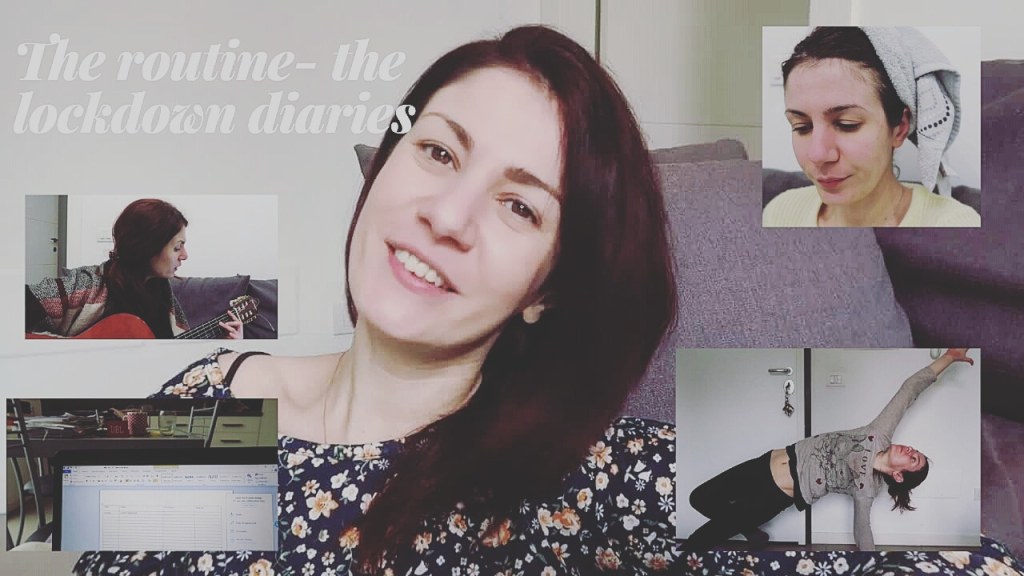
The Routine- the lockdown diaries

One of the things that help me with coping under lockdown is having a routine, a rough schedule for the day, as I mentioned on my last post and video, so life feels a bit normal and also to make it easier to adjust when back in ‘normal’ life however that might be.

Now, I’m not the biggest fan of routines and I don’t always stick to it, but it helps a lot when under lockdown, when there’s no clear structure and I can waste a whole day doing nothing if I let my overthinking brain take over. So here it goes, hope you enjoy it, and please share your thoughts and what you are doing to keep you going every day!

Namaste

Eleni

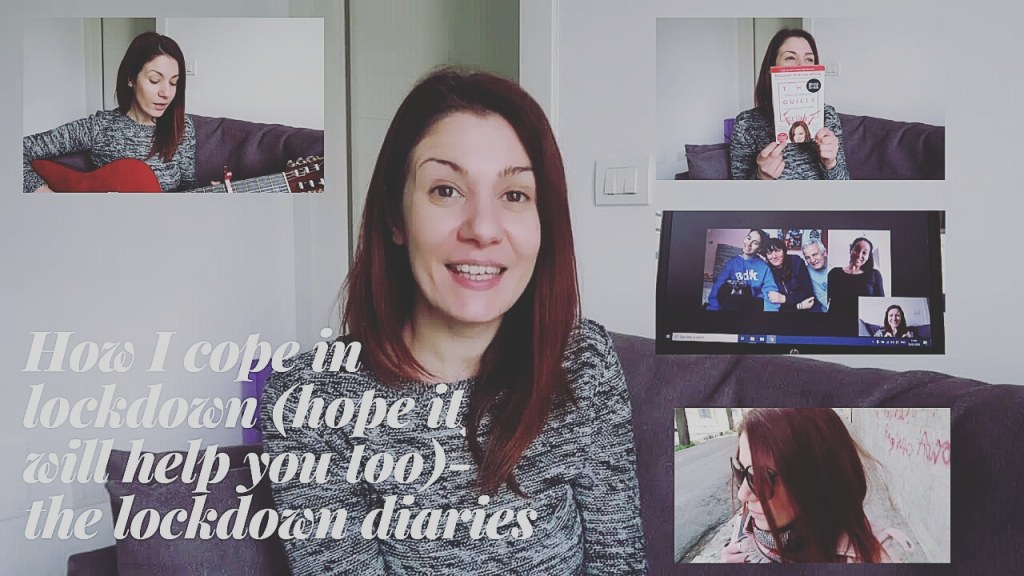
How I cope in lockdown- the lockdown diaries

For those of you who know me or have been reading my blog for a while, you probably know I struggle with anxiety (severe at times) and bouts of depression, so when hell broke loose a few weeks ago, I was extremely stressed to the point I couldn’t think clearly.

Luckily over the years I’ve developed a bit of resilience and a set of coping mechanisms to help me manage my anxiety and quickly get back in control when my stress levels reach dangerous highs.

So, after the initial shock and panic my survival instincts kicked in and I thought I’d put together a video with what’s been helping me stay sane under lockdown (can’t believe it’s been three weeks already!).

These are the the 10 activities I do most frequently to help me and a few links of books, Ted talks, TV programs etc I mention in the video (more details on each in the video):

  1. Exercise. I’ve been doing my daily yoga with my favourite gal (https://www.youtube.com/user/yogawithadriene/playlists), she posts a monthly playlist with videos for each day. I need more exercise though since I’ve been sitting a lot, so any recommendations please comment below!
  2. Music. I somehow stopped listening as much, I don’t really know why, but now I listen and sing every day. Music, food, remedy for the soul, I keep reminding myself that. Thank God for music. In the video I hum a song by my favourite Cypriot musician Mr Costas Kakoyiannis (Αν κοντα σου μεγαλωσω- If I grow up with you: https://www.youtube.com/watch?v=P2x3CqSIaJ8) and I try to play and sing I’ll be your mirror, the Velvet Underground cover, on my guitar: https://www.youtube.com/watch?v=dMeZCPbM6bA)
  3. Going out. Of course we are not allowed and shouldn’t go out all the time but I try to go out once or twice a week, pop to the shop, just to feel I can be outside.
  4. Reading. I love reading, in the winter with a blanket and a cuppa, in the summer, at the beach, on a plane, on a train. Since I started my first EFL teaching job I had very little free time to read but I’m so happy now I have time. I recommend a couple of books in the video (e.g. Fifteen Dogs by Andre Alexis and the Guilty Feminist by Deborah Frances White, check out her podcast too, she is brilliant).
  5. Diet. It’s so difficult to stop snacking when living a sedentary life, but I stopped buying too many and/or too unhealthy snacks so I don’t end up binge-eating all day.
  6. Catching up with friends. Keeping in touch with friends and family is vital, we are social animals after all, we need human interaction but I sometimes find it too overwhelming with all the messages I get, so I have regular breaks so I can cope, plus it helps reduce screen time.
  7. Netflix. I’m a huge Netflix fan and there’s a great selection of TV series, films and documentaries to watch. I try not to watch too much, though tempting, as I spend too much time in front of a screen since I teach online, but thank God we have Netflix. I recently watched a documentary, my Beautiful Broken Brain, which was amazing). I’d love to start a new series though, so any suggestions, please do comment! PS I of course still watch friends every day.
  8. Routine. Being at home all day, it’s easy for someone with a hyperactive brain like me to lose concentration, get lost into my own thoughts and waste time deciding when to do what, I find it too chaotic, so keeping up with a routine helps, a lot. I’ll make another video about this.
  9. Expressing your emotions. This is HUGE. Society taught us one of the unhealthiest narratives of all time, that expressing our emotions is a weakness. It’s the opposite actually, being vulnerable and open about how we feel it’s the bravest thing one can do, especially in these difficult times we live under right now. I highly recommend Bene Brown’s TED talk on vulnerability, definitely worth a watch: https://www.ted.com/talks/brene_brown_the_power_of_vulnerability?language=en
  10. Playing an instrument. I’ve been playing the guitar on and off for years, but now I have time to learn how to read music properly and improve my playing. A great way to stay away from screens!

If you’ve been doing something that has been helping you, please share, it may help someone else, that’s the reason I’m doing it.

I’m also trying to put together a video with hopeful/funny/inspiring messages of friends, family and strangers to spread some joy and positivity, so if you like to be part of me, just email me a short 10-15 sec video with your message (elenizenonos@gmail.com). It can be in any language, just provide me with the transcript and I’ll translate and put subtitles in English 🙂

Hope you are all well and safe.

Namaste

Eleni

5 minutes of mindfulness

About two and a half years ago I went to a talk on recognising signs of mental health problems, by Hugh Clarke, the Former Head of Counselling services at London Met University and counselling Psychologist.

It was a brilliant talk (you can read about it here), informative, thought-provoking, we chatted about it for a while afterwards. I still remember how it started, a 5 minute mindfulness activity guided by Mr Clarke. I absolutely loved it and everyone in the room seemed to have enjoyed it too. No surprise there of course. Mindfulness (focusing in the present moment, whilst accepting one’s feelings, thoughts and body sensations, in a nutshell) has been scientifically proven to alleviate anxiety, reduce rumination, improve attention, manage chronic pain amongst many many other benefits .

A lot of people are sceptical, I was initially too. I had tried to practise mindfulness myself before that day but I found it incredibly hard to focus (my overthinking brain struggles to concentrate on just one thing at a time) and ‘aids’ I discovered (e.g. apps), made me giggle, perhaps too cheesy for me. But Hugh’s 5 minute guided exercise completely changed my mind. It wasn’t cheesy, funny, or superficial. It worked fine and by the time we were done I forgot about everything else and my whole attention was turned to the session. It was just perfect.

Fast forward to about a month ago, Nour and I were thinking of ideas on how to start our presentation for our ‘Survival Guide for New EFL teachers’ session and then I had an epiphany. Hugh’s mindfulness opening activity was so effective I still remembered it after all this time, and we all, especially newly qualified teachers desperately need to be able to focus in the moment, do one thing at a time instead of trying to multitask and failing miserably, so why not start our session by giving our audience 5 minutes to relax and forget about anything else?

So, I found a 5 minute mindfulness activity online, similar to Hugh’s but the language used was too ‘formal’ and frankly tacky, so I created my own using my personal experience and a mixture of Hugh’s activity and the ones I found online (I may have borrowed some beloved expressions from Yoga with Adriene). I thought I’d share it in case others would like to use it. A colleague suggested I made a video (for those that may want to try it on themselves) and I would love to but that takes time so for now here’s the instructions (remember to take your time with each step, check your participants’ reactions and act accordingly):

  1. First, sit comfortably on your chair. Close your eyes and relax your shoulders. Place your feet on the floor, if comfortable, your entire soles touching the ground. If you want to giggle, then feel free to do so!
  2. Take a long deep breath (take a deep breath yourself). Now let’s focus on your toes. Wiggle them, feel them, then curl them really tight. Keep curling…. and release. Take another deep breath.
  3. Now move up to your ankles. Again, notice how they feel (pause) and now move on to your knees. Do they feel tense? If so, relax.
  4. Any thoughts that may come up in your mind e.g. what you are doing after this, what you are having for dinner, imagine they are in a bubble and let them float away. Take a deep breath.
  5. Now relax your bottom (pause), your pelvis (pause) and then begin to notice any tension you may have on your back. Take another deep breath.
  6. Now focus on your shoulders. How do they feel? Now lift them up, lift, lift, lift and…. release. Wonderful. Take another breath.
  7. Now relax your neck, gently twist your head left to right and let any tension go.
  8. Now focus on your jaw. Is it tense? Are you clenching? If so, relax your jaw muscles and take a deep breath.
  9. Finally focus on the top your head. Notice if you are frowning, we often do without realising, and relax your eye brows.
  10. Now lift your shoulders once more, lift, lift, lift…. and release. Let any remaining tension go.
  11. Now focus your attention on what’s happening in the room. Notice any sounds you can hear, any smells…
  12. Take one last deep breath… and open your eyes. How are you feeling now?

Grief never goes away

Thursday, the penultimate day of what felt like the longest January in the history of time.

I woke up in tears. I couldn’t stop thinking of the day my little sister called me to break the devastating news that my grandpa, pappou Costas had died and the day afterwards, the day of the funeral I did not attend, as I was stuck in Cambridge doing my CELTA course.

I remember it vividly, in details, colours and feelings, like it was yesterday. Little moments that I’d normally forget if it was any other day I can recall in excruciatingly painful detail, my little sister and mum messaging me first to say that ‘grandpa was ill’ (he had died but they didn’t know how to tell me), the dreaded phone call afterwards, wandering by the stairs on a quiet corner of the corridor, Shalala asking me if I was OK some time later when I could barely speak at our TP feedback session, crying my eyes out that evening whilst planning a lesson for the following day, the following morning Jonny asking me if I was OK and and his reaction when I burst into tears, sitting outside in the sunshine just before I were about to teach about Mongolian horse racing (the same time as the funeral was taking place in Cyprus) looking up in the sky wishing my grandpa farewell, then remembering that ‘teachers are really actors’ and thankfully making it through my lesson.

Naturally, I started thinking of uncle Spyro’s tragic death just two months later. Again I remember every single detail, visiting him at the hospital a week before he died, in excruciating pain not able to say more than a few words at a time but still in good spirits, getting ready to go see him again a week later but receiving the dreaded phone call to inform us that he had passed away, the eulogy I wrote and ended up reading because my sister couldn’t manage through the tears (not that I did much better), the funeral, the burial, the memorial service for both of them a week later.

I wrecked my brain desperately trying to figure out why. Why do I suddenly feel so overwhelmingly sad about it, 4 months later, 6 months later? Perhaps because I wasn’t there when it happened and I never got closure when grandpa died? But I was there when uncle Spyros died…

Am I still grieving?

Then I remembered something a couple whose daughter died of cancer and came to share their story at one of the Touch storytelling events said.

Jon and Chris described grief like a circle, the circle is everything about the loved one you lost. At the beginning, you are in the centre of the circle, you cannot see past the sadness and the chaos. As time goes by, you get out of the circle and it gets smaller, you can see beyond it, but it’s always there. You just learn how to live with it.

And they were right..

They were right. It’s always there and at any given time you are back in the middle of the circle again. It’s always there, like an old scar that sometimes bleeds and hurts as much as the first time. And this one isn’t even that old of a scar.

So, grief never really goes away.

I did not suppress it. I cried throughout the day (exhaustion did not help) and choked every time I tried to hum a farewell song written by one of my favourite Cypriot composers, Costas Kakoyiannis, beautiful lyrics by his partner Pambos Kouzalis, who had just lost his brother to cancer, sang by an incredible 14 year old, Georgia Neokleous, who had sadly lost her mum to cancer too. Life is cruel like that sometimes.

That’s grief. It never goes away, if from time to time the pain comes back and you should never suppress it. There is no specific amount of time that you need or have to ‘overcome grief’. You just learn to manage it, but some days it hurts like hell and that’s OK.

Today is one of those days. I miss grandpa’s laughter and silly little jokes, his smile when all his grandchildren were visiting, running around the house, uncle Spyro’s wit, advice and little remedies he always suggested, his endless kindness and patience. It hurts but it’s OK.

I was lucky enough to have them in my life and that’s worth all the pain of losing them.

This is for you. Mr Kakoyiannis song (I translated the lyrics as they were too beautiful not to share and the composer included them in the description of the video).

You left and I didn’t get even get the chance to bid farewell,

say my last goodbyes.

How could I live without you for so long?

I throw water on your path, so a plane tree can grow.

To protect you from all evil, always keep it away, keep you safe.

Eleni