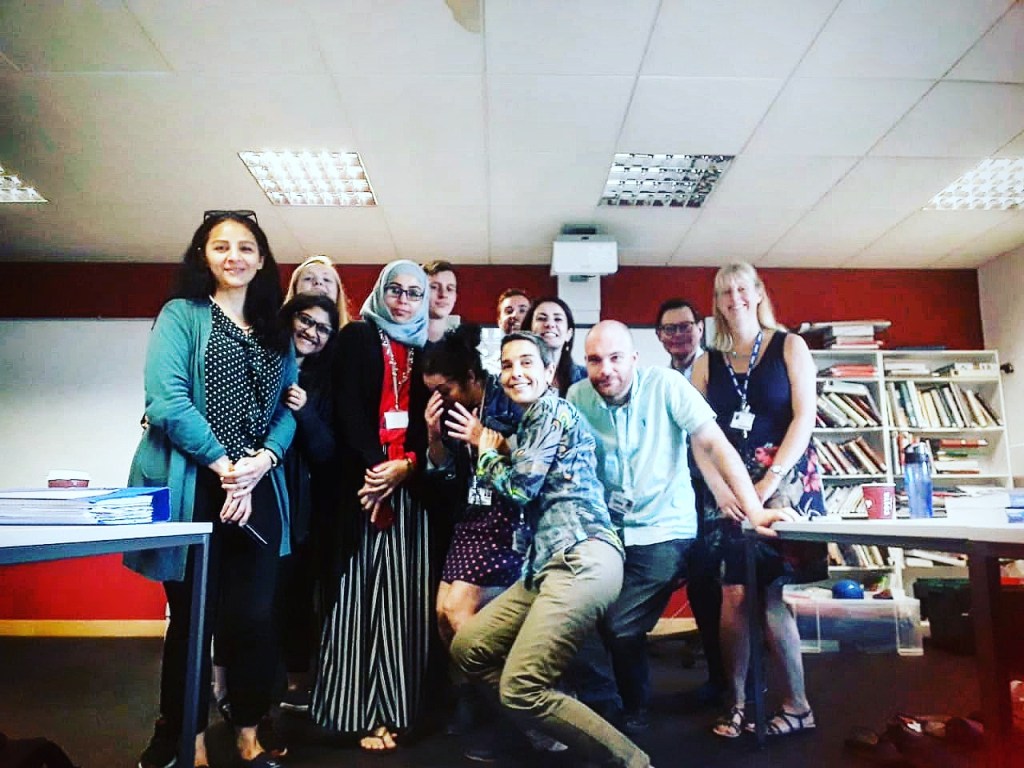
Doing and actually getting an A on my CELTA (you can check out relevant post here) was undoubtedly one of my most memorable and probably the biggest highlight of the year and I wouldn’t have managed to finish it, let alone achieve the highest grade without my classmates.
The (full time) CELTA experience is so unique and intense, it brings people very close very fast, at least that’s what happened with us. It’s hard not to when you spend most of the day, every day for a month together and you see each other at their worst, stressed, tired and emotional.
We looked after another, comforted each other, read each other’s assignments, lesson plans, helped with cutting, glueing, offered food, got coffee, had a laugh, a cry, long chats, we did it all.
I still remember the hug Carolina gave me when I told her my grandpa had died, the sandwich Darren offered me just before my last TP, since I was so stressed I hadn’t eaten all day, the coffee I desperately needed and Elliot got me when I was running late for my lesson planning session and I had barely slept the night before, laughs to the point I almost peed myself with Sonia, deep conversations on life with Monalisa, Shalala’s look, she could always read my emotions, (I’ll never forget on our last day when we just looked at each other and we both started crying) Fatima’s spicy dates I snacked on for days, Ralph’s bright red face the first time he made a sarcastic joke and Anoushka’s brilliantly still unspoilt enthusiasm (ah to be 21 again!).
So thank you everyone, I would have quit on week one if it weren’t for you.
I hope you are all doing well in your new and not new jobs and lives. Maybe one day we’ll meet again but even if we don’t, we will always have that strong, special bond of August 2019 in Cambridge.
Jonny did warn me at the interview, as I assume all CELTA tutors do with their potential students (full details of the interview process here), but no amount of explaining and warning can prepare you for doing a full-time, intensive, month long CELTA course. A level 5 qualification (equivalent to HNC/HND) which normally takes between 6 months/ 1 year full time and 2 years part time squeezed in one month!
Lead in, TPs, Gist Task, Detailed task, Guided Discovery, Monitoring, you pick up the CELTA language from week 1, that’s how intensive it is.
I’ll talk about my experience at Cambridge Regional College but I’m certain the format and the content are similar across the world, as they all follow the Cambridge English syllabus, though not everyone might have been lucky enough to have had such great tutors, classmates and students.
A. format
We started the course on a Friday, to give us time to get to know each other and our surroundings and on the following Monday we taught for the first time, just an introductory, non-assessed class. The following day we had to teach our first assessed Teaching Practice (TP), extremely stressful for someone who struggles with anxiety like me, but it helped we got to know the students the day before first. With most education providers you are required to teach your first assessed lesson on day two. Yes, it’s pretty intense from the start.
-Input sessions
Every morning we had input sessions, where Jonny and Fiona in turns covered the main topics of EFL teaching: learners and teachers, and the teaching and learning context, language analysis and awareness, language skills: reading, listening, speaking and writing, planning and resources for different teaching contexts and developing teaching skills and professionalism. For more details you can check the Cambridge English CELTA syllabus here.
Input sessions with those two were never dull, they were always fun, engaging and creative, even with typically boring, dreadful subjects like teaching grammar. Jonny’s colour- coordinated flashcards and phonetics jokes were superb and Fiona’s energy, honesty and saying things as they were were refreshing. I won’t go into much detail, I wouldn’t like others to steal Jonny and Fiona’s hard work but I’m not sure many CELTA students got to mime, dance and laugh as much as we did whilst learning.
-Teaching
In the afternoons we were split into two groups. Half of us taught the pre-intermediate group and the other half the upper intermediate (and we switched half way, every teacher has to teach two levels). When we were not teaching we observed and gave feedback to each other. Jonny or Fiona (in turns) were always there assessing and providing us with feedback after each session. We taught six 40 min and two 1hr long sessions (8 sessions and 6 hours in total).
Don’t worry if you’ve never taught before, I hadn’t before this. We were provided with lesson frameworks to use from day one and every morning the day before we were to teach we met with our tutor to help us with the lesson planning, except for the last two sessions where assistance with planning was also assessed and varied depending on what grade you were aiming for (more on that on a separate post).
-Observing
You are also required 6 hours of observing experienced teachers. We observed summer school teachers in the classroom, a video-taped session and our tutors who both were AMAZING at their teaching and way better than the rest we observed. Engaging, building rapport almost instantly, monitoring effectively and making the class fun and interesting. That’s how I aspire to teach.
-Assignments
As if lesson planning, input sessions, teaching and observing are not enough you also have to prepare and hand in 4 assignments, around 1000 words each covering the main topics mentioned above. It’s hard work this course!
-Grades
Possible outcomes are:
-Pass A (about 5% of successful candidates).
-Pass B (about 25% of successful candidates)
-Pass (about 70% of successful candidates)
-Fail
Fiona told us from day one she won’t let anyone fail and nobody did.
B. Day to day work
You may assume you go home around 5pm and you only need an hour or two preparing for the next day but that’s not the case. Lesson planning takes, especially to begin with, at least 4-5 hours- ‘Double the time you think it will take’ Fiona used to say and she was right- and the more you progress through the course the more exhausted, sleep deprived and stressed you become, which slows everything down significantly.
C. How to make it
Classmates
All ten of us used to go in as early as possible so we can finish our lesson plans, print our handouts and/or help each other with assignments. Honestly we wouldn’t have made it without each other. I certainly wouldn’t.
We all reached our limit and were about to quit, particularly towards the end of week two. We were warned that would happen, though nobody told us it would happen more than once. If you really want this qualification, persevere. You will feel like quitting at least once, but the sense of achievement will more than make up for it in the end.
Most of us were not from Cambridge, we had no family or friends around, we lived and breathed CELTA for a month and that takes its toll. We kept each other going, read and corrected each other’s assignments, lesson plans, hand outs. We cried together, we laughed together. We bonded a lot, very fast. It’s inevitable when you spend every day with the same people, trying your best for the same thing.
Having a WhatsApp group helped a lot not just with homework but also mentally. Sharing our frustrations and worries was therapeutic.
This may not be the case with everyone who does the CELTA. I think I was lucky I had such sweet, caring, brilliant, funny, all round awesome classmates I now call friends. I miss you all!
Tutors
I’ve touched a bit on this already but I feel we were lucky we had such great tutors. It’s obvious they love what they do and they are incredibly amazing at it. They passed on their enthusiasm, skills and knowledge to us, so when we get out there and teach we care and we do it right.
They were there before us in the morning and left after us most days. Whilst they had to train us, they also had to deal with the rest of their day to day job in between as well as read and mark our assignments.
Both Fiona and Jonny supported us as much as they possibly could, me personally, when I was going through my grief having lost my grandpa on week one. I cried in front of them on my first week and they were both understanding, they offered me a break and checked up on me.
Also I wouldn’t have been able to manage my stress and teach so effectively if it wasn’t for Fiona. She helped me more than she realised. She is awesome.
Students
I got to teach two lovely groups of students. Before my first teaching session I was terrified of what I was about to face but by the end of the course I loved everyone in both classes. People from all over the world, Italy, Spain, Brazil, Colombia, Lithuania, you name it, who happened to now live in Cambridge and just wanted to improve their English all came together and I was blessed with teaching them. I got to know and chat to every single one of them outside the class, have a laugh with them and hopefully taught them a thing or two.
Accommodation
Most of my classmates were not from Cambridge or the UK, so we all lived in a brand new environment dealing with all sorts of situations whilst studying hard every day.
I lived with a host ‘family’, it was only the landlady, Mary in my case, who also provided breakfast and dinner every day and did my laundry every week. It was challenging at times, especially when all the rooms were occupied, noise, queue for the bathroom (though they were three!) but all in all it was brilliant. Mary looked after me and I made great friends, not just Mary but also my Russian flatmates! If you have the option I definitely recommend it, you won’t have time to cook or do anything else for a month, it helps to have dinner prepared for you and a clean room to your disposal.
Overall thoughts
The 4 week CELTA course was one of the most mentally and physically challenging things I ever had to do, it tested my sanity, my health, my limits in more than one way and my anxiety flared up bad, I didn’t sleep more than three/four hours a day, I didn’t get to see much of Cambridge but it was also incredibly rewarding and fulfilling, at least for me. I learnt a lot, I fell in love with teaching and I made friends in Cambridge and all over the world, from Peru to Italy and Azerbaijan. Once in a lifetime experience I’ll never forget.
If I had to do it again I’d may opt for the part-time option, though that has its challenges too if you work full-time, and it may take longer to learn as you don’t apply what you learn immediately, but I don’t regret a single moment.
If you decide to do it full time, I’d with no second thought recommend Cambridge Regional College.
If you do it in Cambridge, go a few days early or stay a few days after to enjoy what this gorgeous city has to offer. I’d love to go back some time and go punting, visit the Wren Library, have afternoon tea at Grantchester and do yoga in the park by the river. Who knows, maybe I will one day.
After thoughts
Despite no previous teaching experience I managed to get the highest grade (Grade A), so it is possible, but I will write about that on a separate post.
I just started a part-time job teaching A1 Movers and A2 Key young learners, the CELTA can’t prepare you for that I’m afraid. I’ll write about that soon too but any advice would be greatly appreciated.
Ever since my big news a few weeks ago a couple of you asked me about the course I’m planning to do and how to get into teaching English abroad, so I thought I’d document my experience, every step of the way as I live it, to hopefully help others considering doing something similar. So this post is about…
Step 1: Getting a relevant qualification
You have a few options when it comes to getting a relevant TEFL (Teaching English as a Foreign Language) qualification.
a) Do I need one?
If you are a teacher or a native speaker you may be able to land a TEFL job with no qualification whatsoever, but opportunities would be more limited, and that also means (especially if you have no teaching experience) you might end up in a foreign country alone with no clue on how to even begin teaching English.
A short online, relatively cheap course is a good option if you are only looking to refresh your Grammar knowledge, learn more about teaching in general as well as teaching English as a foreign language. Some of them are recognised by various regulatory bodies but some countries only accept one of the two classroom based, internationally recognised or equivalent qualifications, Cambridge CELTA and Trinity CertTESOL. With these two diplomas you will also be qualified to teach English for academic purposes (pre-sessional English courses) at UK universities.
c)CELTA or CertTESOL?
CELTA (Certificate in Teaching English to Speakers of Other Languages) is provided by Cambridge English Language Assessment through authorised Cambridge English Teaching Qualification centres and CertTESOL (Teachers of English to Speakers of Other Languages) is awarded by Trinity College London. When it comes to choosing between the two, I’m not sure myself whether one might be slightly better than the other, the content is very similar, but after some research I did, it seems CELTA is better known and that may open more doors for me (and if you decide to apply for funding, the Advanced Learner Loan covers the majority of the tuition fees charged for CELTA at most colleges but only partially for CertTESOL, more on that below).
Both CELTA and CertTESOL are level 5 qualifications, offered full-time, part-time and online but face-to-face assessed teaching as the practical element is what separates them from the rest. The full-time variant is a month long-9am-to-5:30pm-five days a week, intense course whereas the duration varies when it comes to part time options, from 3 months up to a year, depending on the training provider.
I opted for the month long, intense one. It’s a great challenge and you are done in four weeks. Though that will be your life for those four weeks. No time for anything else. You are pre-warned by EVERYONE who has already done it and the course trainer.
When deciding where to apply, make sure you check the training providers offering them are accredited (for CELTA you can check here and for CertTESOL here)
d) Any funding available?
For both CELTA and CertTESOL you can apply for an Advanced Learner Loan(ALL) at specific providers, which will cover your tuition fees up to £811 for CerTESOL, that may not cover the tuition fee and £1417 for CELTA which is what most providers charge for it (list here for CELTA and here for TESOL). Oh by the way, there is a long list of qualifications you can get an ALL for! All details about the loan, repayment terms etc here.
e) What’s the application process like?
Applying was a bit scary for me, since I haven’t applied for any course for a long, long time and my self-confidence levels are running a bit low lately, but it wasn’t half as bad as I thought it’d be.
I applied at Cambridge Regional College, so what I’ll describe is their application process but it’s very similar to most of other providers.
–Pre-Interview task. Part of the application (in addition to the usual personal and education information) is a pre-interview task mainly consisting of grammar, syntax questions and ways you’d teach various English language related items. See examples here. I was allowed to use books and the internet for my answers.
-The interview. I was very nervous on the day, I was terrified I’d be asked a million grammar questions on the spot, but it wasn’t that bad at all. Jonny, the course trainer and interviewer was very sweet and put me at ease straight away.
I was offered a Skype interview, it would have been a nightmare getting to Cambridge at 10am, so I spent a tenner to get a chair for the dining table (I could have sat on the sofa, but in my head it seemed unprofessional), an unhealthy amount of time deciding where to set the table, where to put the chair and so on (of course the overthinking took over).
I woke up early, had breakfast, did my make-up, put a nice semi-formal top on (I kept reminding myself this was not a job interview but it’s hard to get out of that mentality), got a cushion and my blanket to keep my feet warm and made a cuppa. All set!
After introducing ourselves and talking a bit about my background and the reasons I wanted to do the course, we then went over my pre-interview task answers, to make sure my level was English was adequate. There was also a short 15 minute interview exercise, with a couple of questions, similar to the ones on the pre-interview task.
He then told me more about what the course entails, the units we’ll cover, that teaching starts from day two and the fact I won’t have any social life for a month. What I got from what Jonny and some of my friends and colleagues who’ve done the course, as mentioned earlier, is that it will be intense, time and life consuming for four weeks but also rewarding.
‘It was tough, but so worth it!’ every single person who’s done it told me.
The main purpose of the interview is not to check your Grammar or vocabulary skills (the trainer has to check your level of English is satisfactory, but they don’t expect anyone to be an expert and know every single rule or exception). It’s for them to make sure you are applying for the right reasons and you are aware of the intensity of the course and for you to understand what’s about and whether you are prepared to take it on.
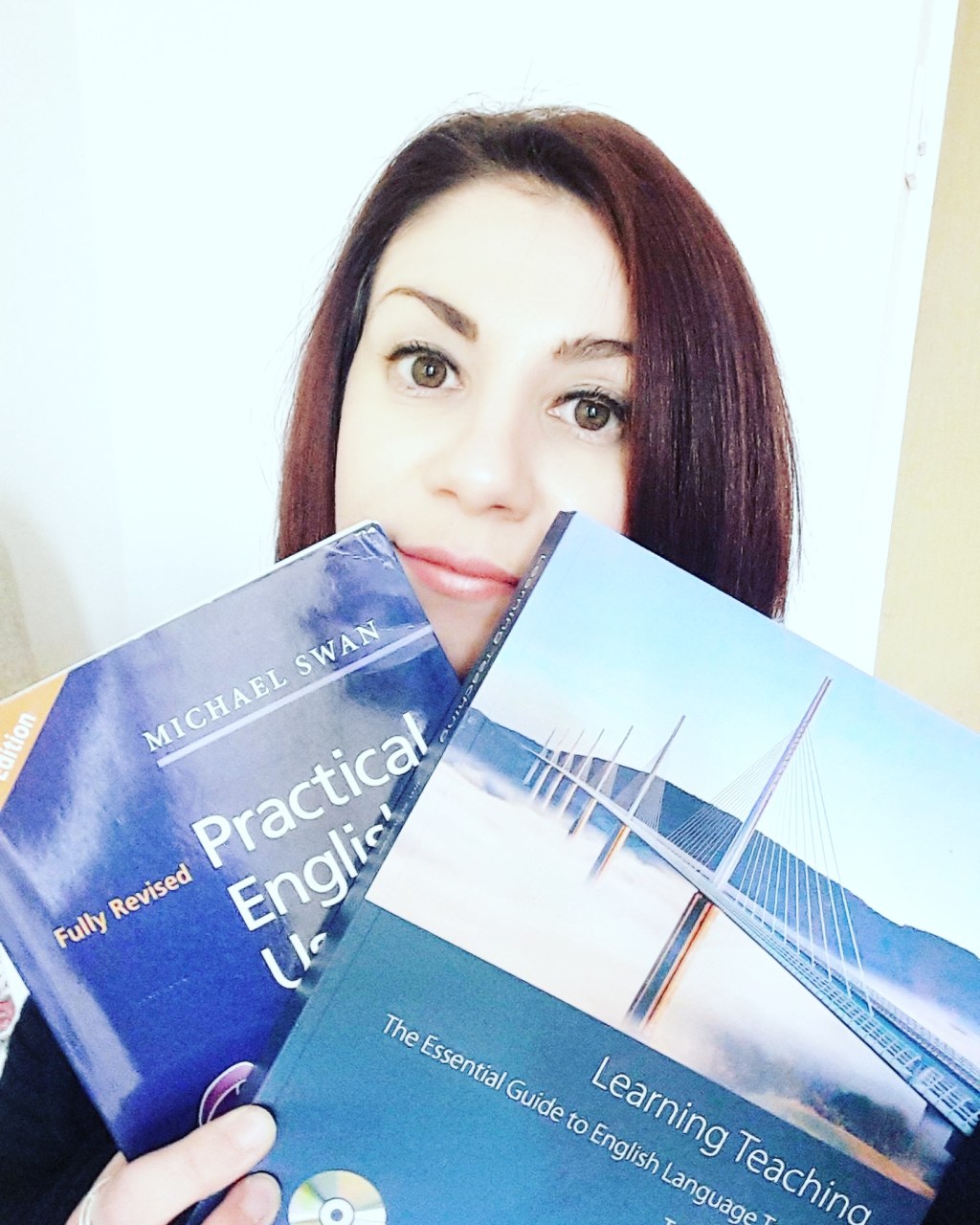
The interview concluded with Jonny offering me a place, explaining what the next steps will be and sending me a book recommendation list and a pre-course task, so I can start preparing.
That’s what I’m about to start now. Any questions or advice, comment below!