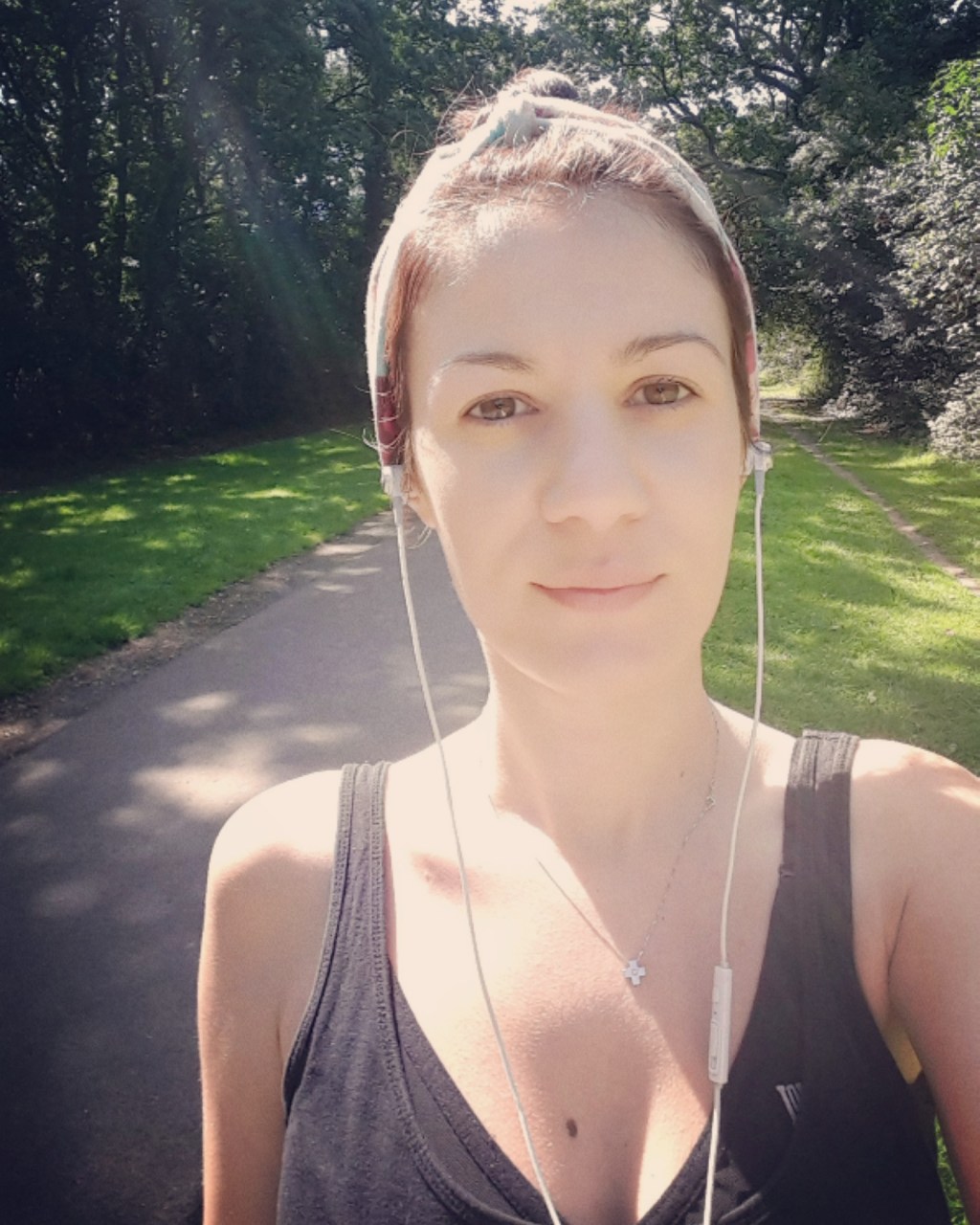
Training for my first marathon in the Cyprus heat

There’s a lot I could be writing about since my last post, which was months ago. Life can get so hectic. Today, though, I want to talk about what I’ve been focusing on for the last few months: how it feels to train for my first marathon, in Cyprus’ scorching summer, and what I’ve learned so far.

Karim and I decided to sign up for a marathon together, as we love a running challenge, and it would make it even more special if we did it abroad. After some research on dates and possible destinations, we landed on the Budapest Marathon, on the 12th of October. It will be my first full marathon and Karim’s second after Athens (he’s run two ultramarathons since then). His aim is to do a personal best, and mine is to finish in good health. So, after a cardio test and getting a coach (everyone’s favourite, George Loukaides), I’ve embarked on this 4-month journey, and 2.5 months in, here’s what I’ve learned so far.

  1. Vaseline is my new best friend! If you have been running for a while and you’ve trained for a half or a full marathon, you know what I’m talking about. The ever-so-painful chafing that comes with long runs, especially in the summer heat. For weeks on end, after my long runs, new red ‘soft spots’ appear: under the armpits, under my boobs, my nipples, random spots on my back, between my thighs, and the list goes on. I’ve tried an anti-chafing stick, but it didn’t work out, so I resorted to the most common remedy that most runners turn to: Vaseline. I spend a good 5–10 minutes before every long run methodically applying Vaseline to all the ‘soft spots’ I’ve discovered so far. I suppose, as my husband suggested, my skin will probably become thicker, and not get chafed as much. Not sure when that will happen, but until then, I’m used to people staring, wondering what happened to me when they come across the scars I cannot hide in the summer.
  2. Cruel, early mornings. When long runs reach above 21k (which, based on my average pace, is about 2 hours long), in order to avoid the heat, I have to leave the house by 5 a.m. at the latest. Last week, due to another extreme heatwave where the temperature reached 45 °C, I went running at 4:30 a.m., which meant waking up at 3:45 a.m. Having to wake up this early messes up my sleep, my stomach, everything, but it has to be done. The feeling of achievement in the end more than makes up for it.
  3. Early nights. Getting up at 4 a.m. means going to bed by 9 p.m. at the latest, which doesn’t leave much time for socialising or anything else. Preparing for a marathon takes its toll on your social life, that’s for sure.
  4. Track days are now a thing. Some of the training involves speed workouts (intervals and tempo runs), and on those days, I have to get up early to go to the nearest track. I find it a bit boring running around a track, but there’s no other alternative, and you do meet other runners who suffer as much as you because they happen to like running and all the good and the bad that come with it. It’s quite comforting and gives a sense of community to be running together with strangers at 5 in the morning.
  5. Humidity, oh, the humidity. There are some rare mornings when the air is crispy fresh at 5:30–6 a.m., but most of the time, you can barely breathe because of the intense humidity in the summer months. On those days, you just have to accept your fate. You will have to push harder, you’ll be slower, and it will be more tiring, but what can you do?
  6. Electrolytes and gels are my second-best friends. I can’t survive without electrolytes and gels, especially during long runs. Though carrying everything on me is not the most convenient, it helps me stay hydrated and avoid severe headaches.
  7. Kefir and chocolate milk are now my favourite treats. Both drinks help in recovery after a long run, and they are delicious!
  8. Long run days are a write-off. After running for 3 hours or longer, both the body and the brain are so incredibly tired that, physically and mentally, all I want to do for the rest of the day is sleep and rest. Sometimes it can take 2 days to fully recover.
  9. It’s all in the mind. When the going gets tough and legs want to give up, either during speed workouts or particularly during long runs, what keeps me (and most people) going is self-talk, motivating myself to keep going (and some music!). It has worked every time so far. Oh, the irony, how running can be a mental health remedy, but also a challenge at times.
  10. Training with my hubby makes a world of difference. Despite all the soreness, sleep deprivation and pain that come with preparing for my first marathon, doing this with my best friend has made it really special, since we go through all of this together, supporting each other. I can’t wait to see him at the finish line on the 12th of October!

I relapsed, now what?

Happy sunny Sunday!

I just came back from a run and I feel great. I love the high, my body flooding with adrenaline and endorphin.

I sometimes exercise at home and as you might know, I’ve been doing Yoga every day for the last 20 days and I love it. I’ve recently posted about it if you want to know more. You can have a read here.

Yoga relaxes me, I feel more confident and has already taught me a lot on how to love and take care of myself. But I need cardio in my life. I need the high and I desperate want to improve my stamina and strength.

I love Zumba and dancing. I can’t afford either right now, and when it comes to dancing, there are not many options in town (if you know of any do let me know!).

I love running. I know it’s not for everyone. For me, putting on music (I highly recommend the personal running mix on Spotify, it picks up your tempo first and selects songs based on your pace and the music you love), looking around, enjoying the moment (and often stopping to take a photo to remember that moment) the air on my face, my heart beating fast, is one of the best feelings in the world.

But I don’t go running that often. I often come back from work tired, hungry and I struggle to find the motivation to get out and go running or do any form of exercise.

So I often relapse. As I do with most things.

I eat healthy most of the time but I can’t resist a treat and LOVE a pizza on a Friday.

Some days I struggle to stay positive and I let myself become sad and depressed. And some days I feel like doing nothing at all.

But I promised myself that every time I relapse, I need to get back on it. And since then I feel much better. Because I know a moment or a day of weakness doesn’t mean I should let myself go, I should not give up.

Coincidentally, I recently came across relapse management in a book I’ve been reading on CBT, An introduction to Cognitive Behaviour Therapy, Skills and Applications (Westbrook D. et al, 2007). It’s a heavy read at times but very educational.

Relapse management is such a vital skill for everyone to develop. Not only in therapy but in daily life. The book suggests to ask yourself the following every time you relapse:

  • How can I make sense of this?
  • What have I learnt from it?
  • With hindsight, what would I do differently?

In this way, you learn more about your vulnerabilities, weaknesses, yourself and also gives you a plan, so after each set-back you can still get back on it and reduce the chances of relapsing again.

So that’s my message for today!

Relapsing of any form does not mean giving up or starting from scratch.

Relapsing means you are a human being and if you look at it as a chance to learn more about yourself and improve your mental and physical wellbeing, you’ll feel much happier and confident.

Amen 🙂

Eleni