Mental Health Mondays – 9. Still suffering (the effects of the pandemic on the mental health of older people)

I was recently asked what motivates me to do what I do, write, make videos and so on. What is the reward for me as I’m not trying to make money out of it.

Let me tell you about Marcel*.

Marcel is a partner from France and we’ve been working together on a project since November 2020. I remember the first time I virtually met him, as our first meeting took place during another lockdown. A 50-something year old, with a heavy accent I absolutely loved. I really liked him as a person and his sense of humour since the first day.

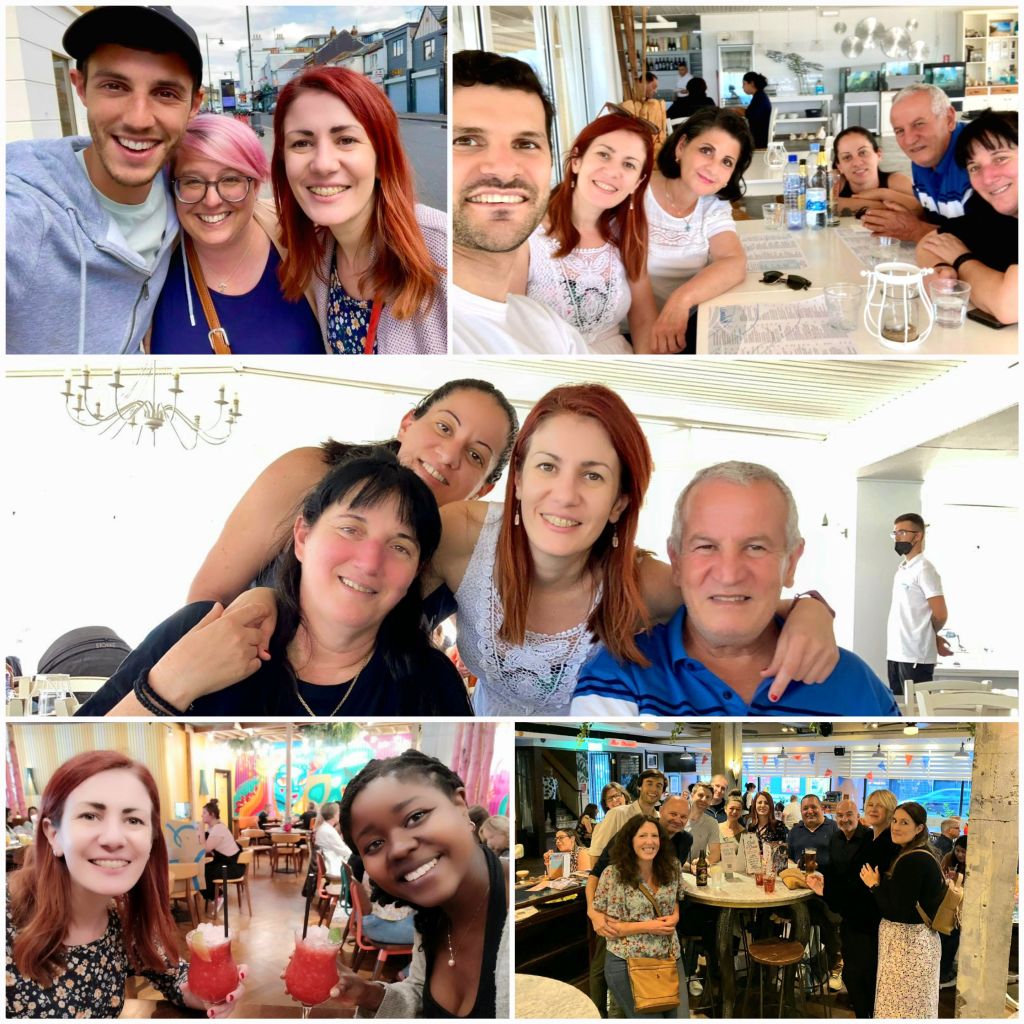
I met with the rest of the partners face to face in Nicosia, about a year ago, but I’d never met Marcel in real life and he was busy during some of our online meetings too so when I heard he was joining our partner training in Slovenia, I was pretty excited to finally meet him in person.

And it was genuinely a pleasure. Well-read, smart, sophisticated, a wine and fine dining lover without the pretentiousness, also funny, witty, surprisingly honest and a true gentleman.

On our last dinner together, we started talking about how the effects of the pandemic still lingered for children, as some started school during COVID-19 and spent months on end locked inside, with no other social interaction. We all agreed that it’s been tough on all of us, especially children, but Marcel said:

‘Yes, I agree, but children are resilient, look at me, I still suffer!’

I failed to mention at this point, that Marcel wore a mask for most of the week and avoided sitting close to anyone. The reason: If he catches the virus, his wife might die. For that same reason he moved in a rural area with his wife during the pandemic (he still lives there), with minimal social interaction with anyone else. He told us how much he hated it and how he drove himself mad living in the middle of nowhere, in a small village with just a few houses.

How incredibly sad. Older people already find it hard, feeling isolated and lonely, as it is, society somehow forgets about you when you grow old, although it should have been the opposite, we can learn so much from older generations, they are beacons of knowledge and wisdom, but the pandemic has made it even tougher for them to cope.

A couple of others shared their stories. I mentioned a horrible news story from a Cyprus, an old man who died alone during the pandemic and was found days later, since he had noone to check up on him.

This is the sad reality and we need to do something about it. We need to look after, love and nourish the people who took care of us and kept the world going whilst we were growing up. We owe it to them.

During that same dinner, Marcel asked me if I still wrote. It caught me by surprise.

‘How do you know I write??’

-‘I remember when we all first met online, you told us that you had a blog, and I found it and read a lot of it. Do you still do it?’

-‘Yes, I do! Not that often but I do. I don’t write much about travel or food anymore, but I still write about mental health’.

-‘Oh nice, I’ll read it when I get home!’

And that’s why I keep writing. This is the reward. The impact however small or big on someone’s life when they read one of my posts, either because they feel the same, or they learnt something or they just enjoy my writing.

Eleni

*Marcel is a pseudonym, in case the person wishes to remain anonymous.

Mental Health Mondays – 8. Toxic Positivity

Sunday, 18th of September, 2022

6 o’ clock in the afternoon…

I just woke up from a two and a half hour nap and felt that I was hit by a bus.

I rarely nap, I hate the feeling afterwards, but after about 30 hours of travelling in 4 days (around 60 hours of buses, trains, planes and running around airports in the last 15 days), my body and mind just gave up.

A week later and I still have a lingering cold, I missed a few important gatherings I wanted to go to but couldn’t and just woke up from one and a half hour nap. I’m flying again on Monday at 6:25 in the morning (I’ll probably be in Slovenia by the time this is out) and I’m not sure if my body can cope.

I’ve been trying different remedies, I’m taking vitamins, trying to exercise and rest as much as possible, but nothing seems to be effective, at least not to the degree needed for me to function at least a satisfactory level.

Inevitably, I’ve been complaining about it, because I’m exhausted. I know it doesn’t help in anything and I try not to do it as much but it’s OK to not feel well and not hide it.

Feeling guilty because you are sad or angry, hiding painful emotions, dismissing other people’s difficult feelings, ignoring your problems, only posting ideal photos on social media, and reciting ‘positive’ quotes about tough situations are all examples of what’s called toxic positivity.

I’m sure most of us have been told these before:

  • Everything happens for a reason.
  • Just be positive!
  • It can always be worse, be grateful for what you have

And the list goes on.

I noticed that a lot of people do it (sometimes even I fall into the trap of doing it) and I absolutely hate it. Emotional intelligence in general, and empathy in particular is all about identifying and acknowledging the other person’s feelings, and respecting what they are going through without judgement.

We all have been guilty of ignoring our and other people’s feelings and promoting all this (toxic) positivity. Yes there’s always worse and I’m grateful for what I have, but there’s also better. Also, not everything happens for a reason. Sometimes it’s just (bad) luck, coincidence or unfortunate circumstances. Most importantly, we don’t always have to be positive, as long as sadness and pessimism don’t take over and disrupt our functionality.

Here’s some photos from my recent travels. I didn’t have time to see much of any city, just a couple of hours in each as I had to work and travel. I’d rather I travelled for leisure, rather than this, but I’m doing the best considering the circumstances. I’m still exhausted and I hope this doesn’t continue for long. Today I’m not that positive about it, maybe tomorrow I’ll be, but it’s OK.

Have you experienced toxic positivity? How do you deal with it?

Namaste

Eleni

Mental Health Mondays – 7. Post holiday blues

The first Monday after the summer holiday. The absolute dread of having to get out of bed and get ready to go to work. A week of overcaffeinating yourself to stay awake, missing the sea, the soothing sound of the waves (but not the sun, it’s still 39 degrees Celsius in Cyprus), the food, the daytrips, reading, writing, swimming, your friends, your family, all the free time you felt guilty about (Mental Health Mondays – 6. The guilt of doing nothing) and desperately thinking of ways to prolong your annual leave.

Why are summer holidays or any holidays for that matter never enough?

Maybe because most of us don’t spend much time resting or having fun? Or perhaps we don’t have enough time during our hectic daily routine and work life to enjoy ourselves or catch up with friends and loved ones as much as we’d like to because ‘we are always busy’.

It made me wonder how humans came up with this work model. Who decided that the majority of us need to work about 340 days out of 365 a year (taking into account that we get about 21 days of leave and 4 bank holidays on average) for 50 years until we retire, old and exhausted?

It’s a cliche but we should work to live and not the other way around.

I hope in the future I can change that for myself and for others.

I’m not sure what can ease the post holiday blues until then, for me what helps at the moment is planning mini-holidays or day trips once or twice a month, have something to look forward to. How do you cope?

Eleni

Mental Health Mondays – 6. The guilt of doing nothing

“Il dolce far niente” Italians infamously say. The sweetness of doing nothing, the ability to completely and utterly enjoy and savour each moment, the pleasure of being idle.

Why and how have we lost this ability to enjoy our free time? Why do we feel guilty about it instead? I had this very discussion with my wonderful friend and kindred spirit Marithea a few days ago, whilst catching up after almost a year. ‘I have an idea, why don’t you write about it on your next blog?’ she suggested and it couldn’t come at a better time.

I’ve taken two weeks off work to relax, rest and recharge before the September madness and I think I managed to do that for just one or two days. I spent the rest of the time doing everything else, shopping, going to a pottery workshop, catching up with friends, a few days away with my crazy family and a lot of thinking about my next career step, as well as feeling guilty I haven’t made any videos or written anything in a while. I barely made time to read, write, play the guitar, or just sit and listen to music.

Even when I try to relax some weekday evenings, after a long and busy day at work, I feel guilty. I feel this deeply rooted shame for my inability to read a book or stare at a screen again after more than 8 hours of screen time, or even have clear thoughts and make sensible decisions about anything.

Why is that? It’s what’s commonly known as productivity anxiety. We humans have the innate obsession to get things done and be creative ALL the time, something we all struggled with during the pandemic when our options were severely limited. Surely, as soon as we could get out, most of us got even more obsessed with being productive, which is incredibly unhealthy. Our bodies and brains need rest and idle time, to be able to function fully and correctly.

Maybe the 8 hours of work, sleep and play model of the First Industrial Revolution was an improvement on the 12-14 hour day shifts, but none of us really works for just 8 hours a day. Most people work for 9-10 hours a day taking into account commuting and lunch break. By the time you get home, cook, clean and prepare for the following day, (unless you are one of the lucky ones who have help or someone else does the house chores for you) that’s it, the day is over and your brain is already overheating.

We need to learn to make time to rest and have fun, our whole life can’t be just work. And workplaces should accommodate human needs to the highest degree possible. We need to work to live, not live to work, otherwise what’s even the point? Retired old and exhausted at the age of 65 (if it doesn’t get higher by the time I retire), desperately trying to squeeze as many life experiences and joy as possible in the few years I have left? No, thank you.

So, I’m going to try harder to make time for rest and relaxation. How do you manage your free time?

Eleni

Mental Health Mondays – 5. Money worries

I was born and raised in a working class family.

My grandma Eleni used to work as a cleaner at a psychiatric hospital, raising three children on her own. My grandpa Costas was a shephard and after the 1974 invasion a factory worker providing for his wife and their 5 children.

My dad has had two jobs since he was 20 years old, and my mum worked on and off, focusing on looking after us most of her life. They both spent the last 40 years making sure my sisters and I have everything we needed. And they absolutely and utterly succeeded, with no shadow of a doubt.

We might not have had the most expensive cars or clothes, or holidays abroad, but we had a comfortable childhood and teen years, making cherishing memories, holidays in Cyprus with family and friends and endless support, due to their hard work and love. We were always bought new clothes once or twice a year, there was always plenty of food on the table, we were all bought cars to be able to drive to uni and we all studied.

My parents were always stressed about money, as you could imagine, as their parents had no money to help them . They were worried they might not have enough to look after us. My dad still gets anxious about it. We grew up appreciating what we have because we knew first hand how hard it is to get it.

I’d have never been able to study in the UK if it weren’t for my parents. When I finally graduated and started working and looking after myself, I worried about money from day 1. I learned how to prioritise my needs, what I could spend on what and learned to manage, so I didn’t run out of money. I would hate to ask my parents who already did so much for me, I already felt bad enough I couldn’t help them financially as much as I’d liked to. I did waste some money over the years but most of the time I managed.

When I lived in the UK for 10 years, I always paid my rent and bills on time, I got to travel a bit in Europe, I watched plays and musicals, went around the country, bought myself what needed, ate out with friends often, and although I lived a comfortable life, I always worried about money.

Living in Cyprus, earning significantly less than I did in the UK, not being able to save much, restricted to what I can spend on myself and my personal, social, mental and emotional needs, on travel or anything else I’d like, has intensified that worry and anxiety.

What I wouldn’t give to wake up one day and not worry about money, my parents housing situation, about paying the electricity bills or worrying when I’d afford a new car, or go out for fancy dinner, to be able to book the more expensive hotel I’d like or book tickets to Latin America, or buy a new laptop and not having to save up for months (or years) first.

Money doesn’t bring happiness, but only if you have everything you need and you don’t worry about it. It may not bring happiness but it can surely take away large part of (my) anxiety and worries.

When I was younger I felt ashamed I worried about money, I tried to hide my financial situation from friends and colleagues. But struggling or asking for help is nothing to be ashamed of. We were not all born in wealthy families, and for some of us life is harder and things don’t come easy. It made us stronger though, we learn how to live with little and appreciate what we have. So if you also worry about money, just know you are not alone.

A number of different studies have shown that most of us worry about money, e.g. more than three in four Americans reported feeling anxious about their financial situation, which I doubt is different in Europe. Financial stress can also increase the chances of someone commiting suicide (https://www.health.com/money/financial-stress-suicide-risk, https://www.moneyandmentalhealth.org/financial-difficulties-suicide/ https://www.bbc.com/news/business-46428756 etc), and I’m pretty sure financial anxiety has increased even more so during the pandemic.

I hope you and I and everyone who struggles one day we have enough money not to worry about it but even if we don’t, let’s talk about it, share our experiences and help each other, and try as much as we can not to stress about it. Easier said than done, I know… but let’s try anyway!

Namaste

Eleni

Mental Health Mondays – 4. Living with anxiety

I often wake up with a rock in my stomach. A solid, heavy rock. Sometimes it feels that it’s spinning, other times it’s pulling me down. Occasionally it makes me dizzy or nauseous. Some days it feels bigger, some days I can barely feel it, but it’s still there. That’s how anxiety manifests on me.

I don’t remember when I started struggling with anxiety. I suspect I always had it, since I was a child, I just didn’t know what it was. I was always a worrier. I remember worrying every time an inspector came to school to check us for lice in case I had any and got embarrased in front of the whole school, or whether my skirt was caught in my underwear (this still worries me!). As I grew older, my concerns took various forms and combined with a few traumatic experiences e.g. my ex stalking me for a year or so, emotional abuse etc, I reached a point I couldn’t handle it more than once.

Only in the last few years I manage to cope more efficiently. I just cope, it doesn’t really go away. But even to the day, every now and then it gets out of hand. Only a year ago, I was so stressed I lost my appetite and that gave me sever stomachache. It physically hurt to eat anything. After that, I promised myself I wouldn’t let it reach to that level again.

It can still happen, I know that, but at least I can handle it better. Yoga, running, my guitar, writing, travelling, spending time with loved ones and a lot of me time help me the most.

I’ve written about anxiety many a time:

Heatwaves, pandemic, anxiety and here I am, stuck in the middle.

Lockdown fever (why lockdown needs to end asap)

How anxiety feels like…

Following my dreams (just need to find out what they are) Chapter 2: Cyprus

(check my page for more) and I’ve been chatting about it with strangers, colleagues, friends, and loved ones for years. I don’t think I’ll ever stop!

Although I had a great week, going to the vegetable and fruit market after many many years, a day at the beach, a few days in Berlin (minus the cruel flight times and the extreme heatwave), the halloumi and anari workshop, and relaxing at the swimming pool afterwards, my anxiety levels have been off the roof as my to-do list grows longer and longer!

Anxiety hits you in many shapes and forms. For me it’s psychosomatic, it gives me headaches and stomachaches and occasionally panic attacks (and insomnia), for others it’s heart arrythmia, blurry vision, nightmares, compulsive eating. Anxiety is a beast, it can cause or aggravate other disorders e.g. OCD and depression and it’s quite common.

According to a 2018 OECD (Organisation for Economic Co-Operation and Development) report, “The most common mental disorder across EU countries is anxiety disorder, with an estimated 25 million people (or 5.4% of the population) living with anxiety disorders, followed by depressive disorders, which affect over 21 million people (or 4.5% of the population)”.

And based on a World of Health Organisation (WHO) report,In the first year of the COVID-19 pandemic, global prevalence of anxiety and depression increased by a massive 25%”.

So, let’s talk about it, learn how to recognise anxiety signs and symptoms on ourselves and others and help each other. How do you experience anxiety?

Eleni

The One I turn 36 (Thoughts on Growing Older)

Thursday evening, the 12th of May, 2022.

The second Eurovision semifinal is playing in the background, whilst I lie on my hotel bed, trying to gather my thoughts and feelings. I still couldn’t believe how these series of coincidences brought me back to Southampton, after three years, since I left. It feels like a lifetime ago and at the same time, like yesterday.

I had finished my work meeting a bit early and after a bit of wander into the city I spent 10 years of my life, probably the most transformative years of my life, my 20s, exhausted from the travel the night before, came back to the hotel, had a shower and decided to just rest.

It’s been months since the last time I decided to ‘just rest’, it’s been so long I can’t even remember when the last time that happened was.

The following day I just wandered in town, at my favourite bookshop, walking across the park and for the first time in a while I felt I didn’t have to rush. I just enjoyed doing things I love. I felt I could breathe again.

I’ve realised that for a while now, I have been running around like a headless chicken for so long, I neglected my mental health, which of course has affected my physical health. Headaches, sleepiness, confusion, memory lapses, loss of appetite.

I really don’t understand how being busy became an achievement and something everyone loves to complain about. It’s not an achievement, it’s a sign of no life balance (Trust me, it’s OK to relax and rest for a day or too, rather than feel you have to do something, just because others do. FOMO is an artificial need created by humans, like many others).

And I feel I lost that balance ever since I left this city. I spent Saturday just catching up with friends, and enjoying living in the moment. Moments with old colleagues and loved ones. I instantly felt how much I missed them. How not to, with all the wonderful humans I know. I wish I had more time to see more of my friends.

Lately all I can think of is what the point of life is. Every now and then I get this horrific anxiety and fear about living and dying and the in-between.

What is the meaning of life? What is my purpose? Why do I exist?

I read a few books and had countless discussions with friends trying to figure out the answers to these questions, just to calm my brain down and the irrational (or rational? I haven’t decided yet) fear of dying.

As Derren Brown, eloquently argues in his book about happiness , if we were to live for ever, we would have eventually be bored of everything, and life would have no meaning. So, what is the purpose of life?

Happiness is amazing. It’s so amazing it doesn’t matter if it’s yours or not. There’s that lovely thing: “A society grows great when old men plant trees the shade of which they know they will never sit in”. Good people do things for other people. That’s it. The end. Anne told Tony on Ricky Gervais’ brilliant series After Life, which is about a man triyng to deal with the death of his wife whom he absolutely adored.

Maybe that’s the meaning of life? Do good things for other people, make the world a better place. It’s all about finding purpose in life. That’s what i remember from a little witty book I read on philosophical theories about life meaning (https://www.goodreads.com/book/show/24612009-every-time-i-find-the-meaning-of-life-they-change-it).

But even when you find your purpose, and to do that you inevitably need to work on your emotional intelligence, your self-awareness, realising who you are, loving yourself, self management and above else empathy, growing up it’s scary as hell.

My parents are now in their late 50s and 60s and I’m terrified for them, watching them grow older. I want them to live forever. It tears me apart. I’m thinking that maybe is better to stick around now they are growing older and they may need me more, but on the other hand what if I finally find my purpose and that takes me elsewhere, away from them?

It makes me sad thinking that they may find themselves feeling lonely and helpless. And I certainly want to try and enjoy being around them as much as I can before they start forgetting and get that lost look in their eyes (I only recently watched the latest episode of This Is Us and the scene where Rebecca doesn’t recognise her children broke my heart).

So on my birthday, a week after I came back from Southampton, I spent the day with my family and loved ones and I cherished every moment.

When thinking about life, mortality and growing old stresses me out, I just focus in the moment, taking one day at a time, spending time with loved ones and I try to make the world a better place, little by little. When my time comes to go, at least I’ll go happy and not anxious and horrified.

The reason I’m sharing all these thoughts, it’s that I know they are not unique and actually expressing them out loud, or in this case in words, somehow makes them more bearable. And perhaps you can relate, and feel a bit of a relief that these terrifying thoughts haunt not just you but a lot of other people.

Namaste

Eleni

Lessons I learned after I turned 30

Back in February 2016, on the 25th of February, I started a blog, this very blog.

I wanted to for a while but my then boyfriend kept discouraging me, arguing that I had nothing to say.

So, just after our break-up and a series of other unfortunate events (which I wrote about at the time), I started “What I learned before I turned 30”, a personal journal sharing what I learned so far in life, a few months just before I turned 30, which actually has helped me (and it still does) to make sense of what was happening at the time and helpfully reassure others that they are not alone, we all struggle in life.

A few years later, I decided to change the name of the blog, since I had already turned 30 and it didn’t make sense anymore. At the time I thought it was a good idea to name it ‘Eleni’s world’ since it was more autobiographical and a mix of different things, and honestly I couldn’t think of a better name.

A few days ago, whilst pondering how to make more time for myself and things I enjoy doing, before I turn completely crazy and exhausted from life, running around like a headless chicken, I had an epiphany.

Why don’t I name my blog ‘Lessons I learned after I turned 30’?

I haven’t been posting as often lately, though I really want to and I’m planning to, and giving the blog a revamp and a more specific identity can movitate me to do that.

So here it is. The new name of my blog.

Lessons I Learned after I turned 30, let it be English or Life lessons, lessons from my travels, personal and work life.

Namaste

Eleni

Why don’t we talk about mental health in Cyprus?

It often comes to my mind, that, when I was in high school, I’d regularly get upset about the fact I couldn’t accurately, and in the way I truly wished, articulate my thoughts and opinions when writing essays. There was always a barrier. There was always something missing.

Years later, when I started putting my thoughts on paper (and later on a blog) it somehow became easier, as if I was released from whatever kept my expressive side blocked and silenced. And I feel that’s how talking about mental health evolved over the years not just for me, but for the rest of the world too.

Although I studied psychology for my first degree, even then, about 18 years ago (I’m almost 36, to save you from the trouble of calculating my age), there was a stigma about it. Not many (if any) would openly admit they suffered from depression, or anxiety, or autism, or bipolar disorder, or panic attacks, as it was considered a weakness or pure ‘insanity’. You would only see a psychologist if you were ‘crazy’.

After living in the UK for 10 years, having volunteered for a mental charity, having written about depression and anxiety myself, seeing, listening and reading about people openly sharing their feelings and troubles, witnessing mental health organisations growing in numbers and popularity (NGOs such as the Samaritans or Mind or social enterprises like the brilliant Touch I used to volunteer for) I was under the impression things would have progressed in Cyprus too, not to the degree they did in the UK, but certainly to some extent.

Surely by now people would have realised that is as important (if not more) to look after their mental health the way they look after their physical health. If you break your leg, you’d go to the doctor, if you are paralysed from anxiety, you’d go to a psychologist, right? Not to mention the effects of the digital era, as well as the global pandemic on mental health, and the fact that we are all busy, all the time. One day we’ll reach to a point we’ll have no time to breathe (just writing about it stresses me out) .

A few days ago, whilst enjoying a coffee on my own at a local cafe, I was brainstorming ideas on what organisation I can volunteer for, and I was unpleasantly surprised to discover after looking up mental health NGOs to volunteer that there aren’t really any on the island!

Why is that? Is it because there’s still stigma around mental health here? Are people here still in denial about the importance of looking after your mental wellbeing? Are they scared to admit when they are struggling? Do they still perceive sharing your feelings as a weakness (it’s one of the hardest things to do actually and it shows strength and character, a brilliant example of the power of vulnerability as Bene Brown eloquently talked about it a few years ago https://youtu.be/iCvmsMzlF7o) ? Is it because there isn’t enough interest by locals or psychologists?

I have been talking about it with a few friends and colleagues lately and I’m still baffled why that is and I wish I had the means to set up a mental health NGO myself, just to make a start.

For now I can’t, but what I can do is continue to talk about mental health with friends, family and strangers, because every time I do, someone would relate to and share their own experiences (which I love to hear about, everyday human stories are so powerful in so many ways) and that’s a clear sign that any outlets to talk about mental health struggles with others in a safe, non-judgmental environment, where you can also receive relevant advice and/or training on how to identify signs or symptoms of a person suffering would be of great benefit.

Who knows, maybe we can soon start a movement and change things up on the island, at least when it comes to mental health!

Namaste

Eleni

When life gives you… grief

Monday, 5th of August, 2019

What if my uncle or grandpa die and I don’t get to see them again? I wrote on my latest post about a week ago.

Less than a week later, one my of worst fears was realised. Pappou Costas, everyone’s favourite grandpa, the kindest, sweetest, funniest, loving, genuine man I had the blessing to have as a grandpa to look after me, take me cycling, take me down town on the bus at the big market in the old city on a Saturday, attend every birthday, name day, every single celebration, died a few days after his 83rd birthday.

When I talked to him last Saturday I promised I’d go see him first thing when I’m back in Cyprus in just a few weeks time. After he lost himself in his own thoughts for a moment (dementia is a horrible, horrible disease) he told me ‘I’m not going to be here, I’ll leave this place’. I cried after we hang up. I hoped he meant he’d leave the nursing home he was temporarily at but deep down I feared he meant he’d leave us, for good.

On Wednesday afternoon whilst observing my classmates teach, I got a message from my little sister and my mum saying that grandpa was not feeling that well. As soon as I got out of the classroom, I called the little one. I knew what she’d tell me before she spilled the words out. Pappou Costas died that morning, on his own at a nursing home, after a stroke.

I couldn’t stop crying but I went to the loo, washed my face and went back into the classroom. I can’t even remember how I managed not to cry in front of everyone. As soon as I walked out of the classroom I burst into tears and cried until bedtime.

I thought of quitting the course and flying home for the funeral the following day. But that wouldn’t have helped in anything. Grandpa’s only wish was for his children and grandchildren who adored, to be happy. Quitting the CELTA course and not having the option to teach English after my Cyprus break would have been a terrible decision.

“Please don’t quit, you flying here just for the funeral won’t make anyone happier. Stay, finish the course” my mum, my sisters and my cousin said.

They were right. And if I want to travel in the next few years, I’d have to learn to deal with terrible situations like this. I have been through them before, but it never gets easier.

I had no idea how to manage it. I was to teach the following day and all I could think of is that I’ll never see my grandpa again. I’ll never see his wide smile, with the odd hair from his moustache always falling into his mouth. I’ll never hear his laughter, his jokes, the way he greeted me every time he saw me or spoke to me on the phone.

But I had to find a way. People go through this every day. I can do it. First I emailed the course leaders. They may well notice my puffy, red eyes and they might misinterpret it and worried I’m not happy with the course.

I then sat down for hours preparing my lesson plan. Honestly, I can’t remember much from Wednesday night. It’s all a blur. Only thing I remember is all the messages I got from my friends. I never missed my friends more than last week and I’ve never felt them closer. I never felt so loved but so lonely at the same time.

I hardly remember anything from Thursday.

Remember, teachers are really actors“, my dear auntie Sophie said. That’s what I tried to do. I cried my eyes out on my way to the college but when I walked in I pretended I was someone else. It worked for most of the day. I only broke down a couple of times.

When I walked into the classroom, one of the tutors, Jonny, took me to another room.

‘Please don’t ask me if I’m OK otherwise I’d start crying’, I said.

-‘I know. I’m just checking…’ he replied.

And that was it. I started crying. He welled up. He gave me a hug and offered me a tissue and a few days off if I wanted to. I didn’t want to though. It would have probably made everything worse, staying at home in a house full of strangers, with no friends around. I will always remember that hug, a human feeling empathy and crying with another human’s pain. So poignantly beautiful.

I did OK in the input sessions but just before 2pm, when the funeral was just about to start in Cyprus, I went outside for some fresh air before the class I were about to teach. I had a moment of silence to myself in honour of my grandpa whilst I felt the sunshine warming up my face. It was cloudy all day but at that very moment the sun came out.

‘My grandpa brought the sunshine out all the way from Cyprus to me, to tell me everything will be OK. I love you grandpa’ I heard the little voice inside my head say. I wiped my tears, took a deep breath and walked back in the classroom.

If anyone told me a week ago that in the next seven days I’d lose my grandpa, cry in front of both of my tutors and somehow manage to pretend I’m OK for days and actually deliver a great class, I’d have never believed them. Who? Me! I cry watching TV adverts and wear my heart on my sleeve, how on earth did I manage this?

Sadly I didn’t make it to Chris’s wedding and I feel terrible for that. For those who know me in person or have been reading my blogs, you know how much I love Chris, he’s one of my favourite people in the world and I’d have loved to be there and celebrate with him the happiest day of his life, but I just couldn’t. I was exhausted. Mentally and physically. Drained. I couldn’t feel any other emotion other than numbness and deep sadness.

5 days later and I’m doing better. I’m still sad and I cried my eyes out writing this, but I can control my grief just enough to get me going for now. It will hit me as soon as I’m done with this insanely intense course. For now, a day at a time.

This post is dedicated to my grandpa and I couldn’t not write a few words.

“A society grows great when old men plant trees the shade of which they know they will never sit in”. Good people do things for other people. That’s it. The end.  Anne said to Tony on Ricky Gervais ever so relevant After Life. That’s what our grandpa did all his life. Good things for other people without expecting anything in return.

This is the last time I saw him, last Christmas, watching his grandchildren and grand grandchildren laughing and playing.

I asked the family to share some of their photos. Always surrounded by his loved ones, always laughing. That’s how we’ll all remember him.

I love you pappou mou. Our lives will never be the same without you. I promise I’ll always try to follow your example. Do good things for people. Make this a better world for everyone.

Eleni